What Are the Top Types of Warehouse Pallet Racking?
Warehouse Pallet Racking shapes how a warehouse stores, moves, and protects its inventory. The right system can make narrow aisles feel workable and keep fast-moving products close to dispatch. The wrong fit can leave valuable floor space unused or slow down everyday picking. As MHI CEO John Paxton has noted, “Material handling solutions must support the flow of goods and the work around them.” That principle is useful when comparing pallet rack designs, though each facility has its own constraints.
This guide explores selective, drive-in, push-back, pallet-flow, and cantilever racking. Each serves a different storage pattern. Selective racks offer direct access to individual pallets. Drive-in systems can hold dense loads, while pallet-flow racks help move stock in sequence. Those differences matter. A forklift’s turning radius, pallet dimensions, inventory rotation, and ceiling height can change which option makes sense. Even a few inches can affect aisle clearance.
Good planning starts with real operating details, not a catalog photo. Measure the loads. Watch how workers move through the space. Check how replenishment and picking actually happen. Then compare storage density with access needs and future flexibility. No rack type solves every problem. And floor plans can mislead. This overview offers a practical starting point, but site conditions and qualified design review still matter before a system is selected or changed.
How Warehouse Pallet Racking Organizes Inventory and Storage Space
What Are the Top Types of Warehouse Pallet Racking?
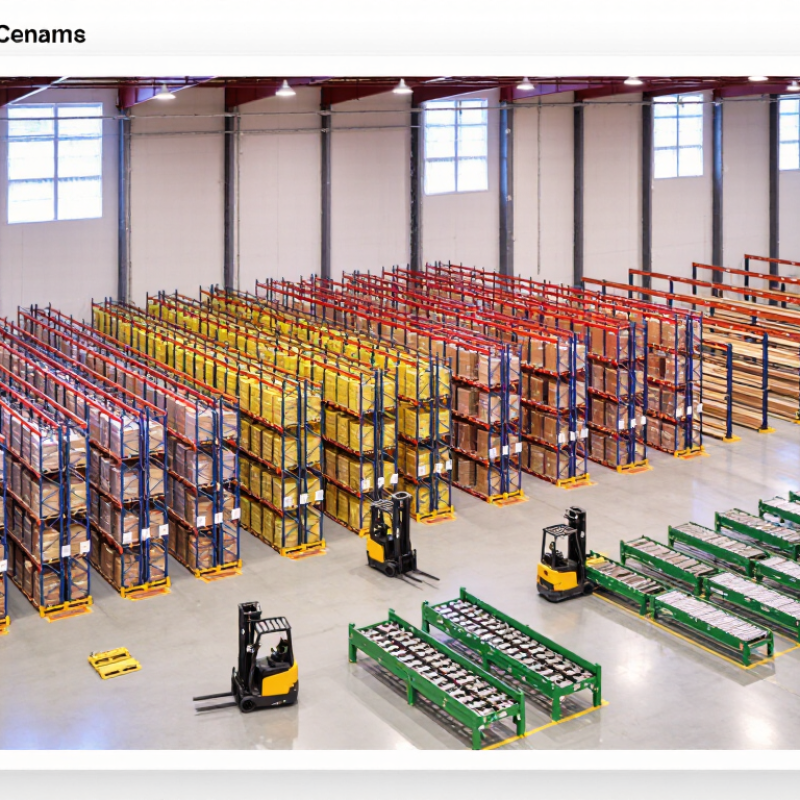
Warehouse pallet racking organizes inventory by giving each pallet a defined location and keeping goods accessible above the floor. Selective racks suit warehouses that need direct access to many different products. Drive-in systems store more pallets in less aisle space, while pallet-flow racks move goods forward by gravity. The right choice depends on product turnover, pallet size, and handling equipment—not just the number of storage positions. A rack plan also shapes daily travel: clear aisles and sensible product placement can reduce unnecessary forklift trips.
Tips: Put fast-moving items near picking and dispatch areas. Keep labels visible from the aisle. Check that rack loads, pallet dimensions, and lift-truck clearances match the actual operation.
Good organization depends on more than rack type. Assign consistent location codes, record stock movements promptly, and separate incompatible pallet sizes when needed. Keep heavier loads within rack limits, and have damaged components assessed before continued use. Small details matter. A misplaced pallet can block access to several others. Even a tidy layout can fall short if order patterns change; review it with warehouse staff and adjust locations as the work evolves.
Top Types of Warehouse Pallet Racking
How warehouse pallet racking organizes inventory and storage space
How to read this chart: Ratings are illustrative planning comparisons on a 1–5 scale, not universal measured benchmarks. Selective racks provide direct access to each pallet, while drive-in racks prioritize storage density. Double-deep, pallet-flow, and push-back systems offer different trade-offs; the best fit depends on inventory rotation, SKU variety, equipment, and building layout.
Selective Pallet Racking for Direct Access to Every Pallet
What Are the Top Types of Warehouse Pallet Racking?
Selective Pallet Racking for Direct Access to Every Pallet
Selective pallet racking stores each pallet in its own accessible position. Forklift operators can retrieve a specific load without moving neighboring pallets. That makes it a practical choice for warehouses handling many SKUs, changing orders, or frequent replenishment. You can see the benefit on a busy shift: an operator can reach a blue carton on an upper beam without first shifting the pallets below it. The trade-off is aisle space. Selective layouts may store fewer pallets per square foot than deep-lane systems.
Access supports picking, but it does not guarantee accuracy. WERC’s 2024 DC Measures report lists median order-picking accuracy at 99.5%, a useful benchmark for warehouse operations. Racking alone cannot deliver that result; clear location labels, disciplined scans, and unobstructed sightlines matter too. Still, the layout can help workers confirm the right position. Small errors happen. A label hidden behind a beam can undo a good process.
Tips: Before installation, map pallet sizes, SKU turnover, forklift turning space, and required clearances. Check beam and frame capacities against actual loads, including pallet weight and height. Review the layout with operators; they may spot awkward reaches that a floor plan misses. And revisit it after the first busy season. The original assumptions may not hold.
High-Density Racking: Drive-In, Drive-Through, and Push-Back Systems
High-density pallet racking uses less floor space by storing pallets in deep lanes, but each system handles access differently. Drive-in racks have one open end, so forklifts enter the structure to place or retrieve pallets. They usually operate on a last-in, first-out basis. That saves aisle space. However, the oldest stock may remain behind newer pallets, making careful rotation important. Check that forklift dimensions, pallet condition, and lane clearances suit the rack design.
Drive-through racks open at both ends, allowing loading from one side and retrieval from the other. This can support first-in, first-out movement, though daily traffic needs clear direction and supervision. Push-back systems use nested carts or rails: a forklift places a pallet, then pushes it backward as each new pallet enters. Retrieval brings the next pallet forward. No deep entry. These systems can speed up access while keeping storage dense, but lane depth and pallet weight must be matched to the equipment. A small mismatch can cause awkward handling. Review load ratings, floor conditions, and operating procedures with a qualified rack professional before installation.
Pallet Flow and Cantilever Racking for Specialized Storage Needs
Pallet flow racking works well when cartons or pallets move through a predictable sequence. Gravity rollers carry each load from the replenishment side to the picking face. That supports first-in, first-out rotation, useful for dated stock and fast-moving goods. Keep it moving. Lane depth, roller type, and braking controls should match the pallet’s weight and condition. A damaged pallet can snag, while an unsuitable slope may let loads accelerate too quickly. Those details deserve a real load review, not a guess from a floor plan.
Cantilever racking is better suited to long or awkward items, such as timber, pipe, or sheet material. Its open front makes loading easier, and adjustable arms can accommodate changing lengths. Measure the longest stock, including any overhang, and allow room for forklifts to turn safely. Check arm capacity, upright spacing, floor anchoring, and clear load labels. It looks simple. It is not. Flow systems can save travel time, but they may restrict access to individual loads; cantilever bays offer access, but need more careful handling and aisle space. The right choice depends on stock shape, turnover, equipment, and how consistently staff follow the loading plan. A layout that works on paper may still need adjustment once daily picking begins.
How to Choose a Rack Type Based on Inventory and Handling Needs
Choose pallet racking by how stock moves, not by aisle appearance alone. Selective racks provide direct access to every pallet, making them practical for many SKUs and frequent picking. The trade-off is wider aisles and lower storage density. Drive-in racks use fewer aisles and suit deep quantities of similar products, but forklifts enter the structure and access is less flexible. Push-back systems store several pallets deep and support faster loading, though the last pallet placed is usually the first retrieved. Pallet-flow lanes use gravity to move stock forward. That matters for clear stock rotation.
Match the rack to real handling patterns. Record pallet dimensions, daily picks, replenishment frequency, forklift turning space, and peak-season changes. Fast-moving goods near dispatch may need direct access; slow-moving reserve stock can often sit deeper. MHI’s 2023 Annual Industry Report reported that 87% of surveyed respondents expected supply-chain technology investment to increase over the following year. That is not a rack-selection rule, but it reinforces the value of layouts that can adapt as operations change. Still, a neat spreadsheet can miss awkward pallet overhangs or blocked sightlines. Test a proposed layout on the floor, and review load ratings with a qualified rack professional.
Related Posts
-
Top 10 Pallet Racking Systems Manufacturers in China
-
2026 Top Pallet Racking Systems for Warehouses
-
What Are the Top Types of Pallet Racking?
-
What Is the Best Pallet Rack Shelving for Warehouses?
-
The Future of Best Pallet Racking Systems: Innovations Shaping Warehouse Efficiency
-
How to Choose Best Pallet Shelving Solutions for Future Technology Trends in 2025