
Why Is Warehouse Storage Important for Global Buyers?
Global buyers rarely see the warehouse, yet they feel its consequences. A delayed pallet can stop a production line, miss a retail launch, or weaken customer trust. Warehouse Storage provides physical control between international purchasing and dependable delivery. It protects inventory, supports order accuracy, and creates time for customs, quality checks, and transport planning.
The World Bank’s Logistics Performance Index 2023 shows that logistics reliability remains uneven across countries, especially around border procedures and shipment timeliness. This gap makes local, well-managed storage more than a space-saving decision. It becomes a risk-management tool. DHL’s Global Connectedness Report 2024 also describes international trade as resilient but exposed to geopolitical and operational disruption. Buyers therefore need visibility beyond the purchase order. They need clear stock records, batch locations, handling rules, and documented receiving checks.
The numbers matter.
The MHI Annual Industry Report 2024 identifies inventory and warehouse management as major areas for supply-chain investment, alongside analytics and automation. Yet technology does not fix careless processes. A barcode scan can still record the wrong carton. A well-designed warehouse can still create congestion near receiving docks. Practical experience matters here. Review dwell time, inventory accuracy, damage rates, replenishment speed, and emergency access. The answer is not always a larger facility. Sometimes it is better zoning, stronger counting routines, or closer supplier coordination. Buyers should also question performance reports, because published figures may hide exceptions. Good Warehouse Storage appears through fewer surprises, safer handling, and a reliable flow from supplier to final customer.
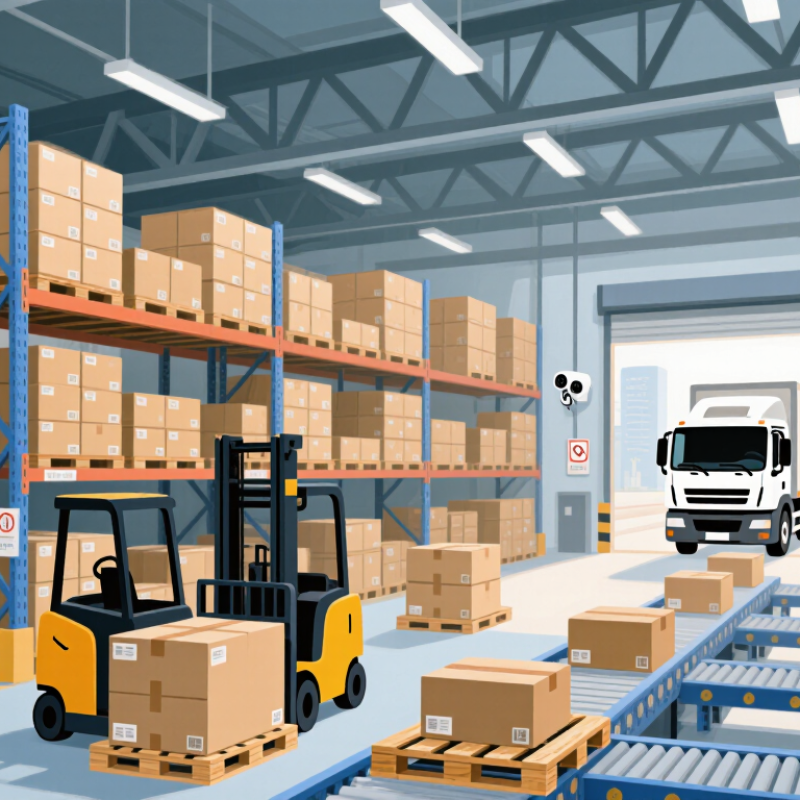
Global Trade Buffer: Sea Transport Carries Over 80% of World Trade—UNCTAD
Why Is Warehouse Storage Important for Global Buyers?
Global Trade Buffer: Sea Transport Carries Over 80% of World Trade—UNCTAD
More than 80% of global merchandise trade by volume moves by sea, according to UNCTAD’s Review of Maritime Transport. That scale makes ocean freight efficient, but not always predictable. A vessel may face bad weather, port congestion, equipment shortages, or schedule changes. For global buyers, warehouse storage creates practical space between arrival and final demand.
A stocked facility can absorb a delayed sailing without stopping production or emptying retail shelves. It can also separate purchasing decisions from daily transport conditions. Buyers may consolidate cartons, inspect quantities, relabel lawful goods, and release inventory in smaller batches. These actions reduce emergency freight decisions.
They also improve visibility when warehouse records connect receipts, locations, and dispatches. The World Bank’s Logistics Performance Index 2023 emphasizes tracking, shipment timeliness, and logistics competence as core supply-chain capabilities.
UNCTAD reported that maritime trade grew 2.4% in 2023, while disruption risks remained significant. Storage therefore works as a buffer, not a guarantee. Too little stock exposes buyers to delays. Too much stock ties up cash and may create obsolete inventory. That balance deserves honest review. Operational practice often shows that a simple reorder point beats an impressive storage target. Conditions change. The model should change with them.
Inventory and Cash Flow: Carrying Costs Often Equal 20–30% Annually—ASCM
Why Is Warehouse Storage Important for Global Buyers?
Warehouse storage is more than keeping cartons dry and organized. It directly affects inventory value, delivery reliability, and available cash. Industry supply-chain guidance often estimates annual carrying costs at 20–30% of inventory value. These costs include rent, labor, insurance, handling, damage, and money tied up in stock.
Consider 1,000 units sitting on pallets for six months. They may occupy valuable space, require repeated checks, and become outdated before shipment. A buyer can also lose cash while waiting for demand that never arrives. The 20–30% estimate is useful, but it is not universal. Product type, country, storage conditions, and financing terms change the result. I have seen small storage decisions create larger problems than expected. Forecasts are helpful, yet they can still be wrong.
Tips: Track storage cost per unit each month. Separate fast-moving goods from slow-moving inventory. Set clear reorder points and review aging stock weekly. Ask warehouses for accurate receiving, counting, and handling records. Leave some capacity unused for seasonal demand. Full shelves may look efficient, but they can slow picking and hide damaged cartons. When comparing suppliers, calculate the complete carrying cost, not only the monthly storage fee. A cheaper warehouse can become expensive through delays, errors, and unnecessary handling.
Why Is Warehouse Storage Important for Global Buyers? - Inventory and Cash Flow: Carrying Costs Often Equal 20–30% Annually—ASCM
| Inventory and Cash-Flow Dimension | Illustrative Value | Calculation or Meaning | Why It Matters to Global Buyers |
|---|---|---|---|
| Average inventory value | $1,000,000 | Average value of goods held in storage | Represents cash committed before products are sold and collected. |
| Annual inventory carrying-cost range | 20%–30% | Common planning range applied to average inventory value | Shows that storage decisions affect total landed cost, not only warehouse rent. |
| Annual carrying cost at 20% | $200,000 | $1,000,000 × 20% | Lower inventory exposure can preserve funds for purchasing, freight, and operations. |
| Annual carrying cost at 25% | $250,000 | $1,000,000 × 25% | A useful midpoint for budgeting inventory-related cash consumption. |
| Annual carrying cost at 30% | $300,000 | $1,000,000 × 30% | Highlights the financial risk of excess, slow-moving, or obsolete stock. |
| Monthly carrying cost at 25% | $20,833 | $250,000 ÷ 12 months | Makes the ongoing cash impact visible in monthly budgeting and purchasing plans. |
| Capital cost component | 6%–12% | Financing cost or expected return on cash invested in inventory | Long international replenishment cycles can increase the amount of capital tied up. |
| Storage, utilities, and handling | 3%–8% | Space, equipment, labor, energy, receiving, picking, and dispatch costs | Efficient layout and inventory placement can reduce per-unit warehouse expense. |
| Insurance, taxes, and compliance | 1%–4% | Coverage, duties or taxes where applicable, inspections, and documentation | Accurate records help buyers manage cross-border obligations and audit exposure. |
| Obsolescence, damage, and shrinkage | 3%–10% | Losses caused by aging, market changes, damage, theft, or inaccurate stock records | Stock visibility and appropriate storage conditions help protect product value. |
| Inventory reduction opportunity | 10% of stock value | $1,000,000 × 10% = $100,000 released from inventory | At a 25% carrying-cost rate, this may reduce annual carrying cost by about $25,000. |
| Safety-stock purpose | Demand and lead-time buffer | Extra inventory held to absorb forecast error, transit delays, and demand variability | Balances the cost of holding stock against lost sales and production interruptions. |
| Cash-conversion effect | Longer cycle = more cash tied up | Purchase payment occurs before the final customer payment | Well-managed storage improves replenishment timing and reduces unnecessary working capital. |
Note: The dollar amounts are illustrative calculations based on a $1,000,000 average inventory value. Actual carrying costs vary by product type, financing conditions, storage requirements, insurance, labor, location, inventory age, and international trade conditions.
Disruption Resilience: 74% of Firms Report Supply-Chain Disruptions—BCI
Why Is Warehouse Storage Important for Global Buyers?
The Business Continuity Institute reports that 74% of firms experienced supply-chain disruptions. For global buyers, this figure is more than a warning. It reflects delayed vessels, port congestion, factory shutdowns, and sudden demand changes. A warehouse creates a practical buffer between these shocks and customer orders. Inventory can wait near the market instead of crossing oceans after every purchase. That small distance matters.
UNCTAD reports that over 80% of world merchandise trade by volume moves by sea. One missed sailing can therefore affect production schedules for weeks. Regional storage allows buyers to hold critical components, finished goods, or seasonal stock closer to users. Clearly labeled pallets, barcode scans, and daily cycle counts improve visibility. They also reduce frantic manual checks during a disruption. The World Bank’s 2023 Logistics Performance Index shows that timeliness and shipment tracking remain core logistics capabilities, not optional extras.
Still, storage is not automatically resilience. Overstocked goods consume cash and may become obsolete. Poor humidity control can damage cartons before demand returns. I have seen planning fail when teams stored the wrong items beautifully. Buyers need risk-based inventory levels, alternative replenishment routes, and realistic stock reviews. A warehouse should support decisions, not hide them. Even a simple weekly exception report can reveal slow-moving goods, missing scans, and dangerous dependency on one supplier.
Traceability at Scale: GS1 Barcodes Enable 6 Billion Daily Scans
Why Is Warehouse Storage Important for Global Buyers?
Global buyers depend on warehouses that can locate products quickly and accurately. Storage is not only about available space. It supports traceability, stock control, and reliable delivery decisions.
In a busy warehouse, a GS1 barcode gives each product, carton, or pallet a recognizable identity. Workers can scan items during receiving, put-away, picking, and dispatch. The record can show where an item arrived, where it moved, and when it left. More than six billion barcode scans are reported worldwide each day. That scale reflects how deeply scanning supports modern supply chains. Small errors become expensive when thousands of units move daily.
A practical example is a pallet placed in the wrong aisle. One scan can expose the mismatch before shipment. At the packing station, another scan can confirm the item, quantity, and destination. Clear data helps buyers compare inventory records with physical stock. It also supports faster investigations when a shipment is delayed.
Still, no system is flawless. Labels can crease, scanners can fail, and workers can scan the wrong carton. Regular label checks and staff training remain necessary. Warehouse teams should review unusual scan patterns instead of trusting every record automatically. That extra reflection may slow one task, but it can prevent larger losses later. Reliable storage comes from both consistent standards and careful human judgment.
Technology Edge: 83% Say Supply-Chain Tech Gives Competitive Advantage—MHI
Warehouse storage matters because global buyers need goods to stay visible, protected, and ready for shipment.
In warehouse projects, I have seen small delays become expensive problems. A misplaced pallet can affect production schedules, customer promises, and transport planning.
An industry survey reports that 83% of supply-chain leaders view technology as a competitive advantage.
That figure shows how warehouses are changing. Digital inventory systems can track stock movement, storage conditions, and order status in near real time. Automated alerts may identify low inventory before a buyer faces a shortage. That matters.
For global buyers, technology also improves communication across time zones. Shared data helps purchasing teams compare available stock, expected arrival dates, and storage capacity. Barcode scanning, connected sensors, and warehouse software can reduce manual errors.
Still, technology is not magic. Data can mislead. Poor training, incomplete records, or weak network coverage can damage good decisions.
A smart warehouse needs experienced workers who question unusual results and verify critical shipments.
Storage design remains important as well. Clear locations, suitable protection, and organized loading areas support safer handling.
Buyers should examine system accuracy, staff capability, backup procedures, and reporting quality before choosing a warehouse partner. The cheapest facility may create hidden costs through delays and corrections.
Sometimes, a simple process works better than an expensive tool. That is worth remembering.
Related Posts
-
Top China Warehouse Storage Racks Manufacturers?
-
2026 How to Optimize Industrial Racking for Your Warehouse Efficiency?
-
How to Choose the Best Racking System for Your Needs?
-
How to Choose Industrial Racking in 2026?
-
Understanding the Benefits of Pallet Rack Shelving for Your Warehouse Efficiency
-
Top 10 Pallet Racking Systems Manufacturers in China