
10 Best Warehouse Storage Racks for Global Buyers

Warehouse Storage Racks are no longer simple steel frames beside a loading dock. They influence picking speed, aisle safety, inventory visibility, and future expansion. The 2024 MHI Annual Industry Report identifies supply-chain disruption, labor pressure, and technology adoption as major operational concerns. These pressures make rack selection a strategic decision, not merely a purchasing task.

John J. Bartholdi III, a respected warehouse design researcher, states, “The objective of warehousing is to provide the right product at the right place at the right time.” That principle guides this review of the 10 Best Warehouse Storage Racks for Global Buyers. Selective pallet racks support direct access. Drive-in systems improve density. Cantilever racks suit long materials. Each design solves a different problem.

The details matter. A narrow aisle may save floor space but require specialized equipment. A taller frame may increase capacity but demand stricter stability checks. The 2024 DHL Logistics Trend Radar also highlights automation, robotics, and sustainability as influential logistics trends. Therefore, buyers should assess load capacity, beam levels, corrosion resistance, installation quality, and compatibility with forklifts or automated systems.

No ranking fits every warehouse.

This list is not perfect. Product availability, regional standards, labor costs, and building conditions can change the result. Careful measurement remains essential. A reliable rack system should support today’s inventory without blocking tomorrow’s growth.
10 Best Warehouse Storage Racks for Global Buyers

Warehouse Storage Rack Types and Their Core Applications

Warehouse storage racks are selected by product shape, turnover rate, and handling equipment. The wrong type can waste valuable floor space.

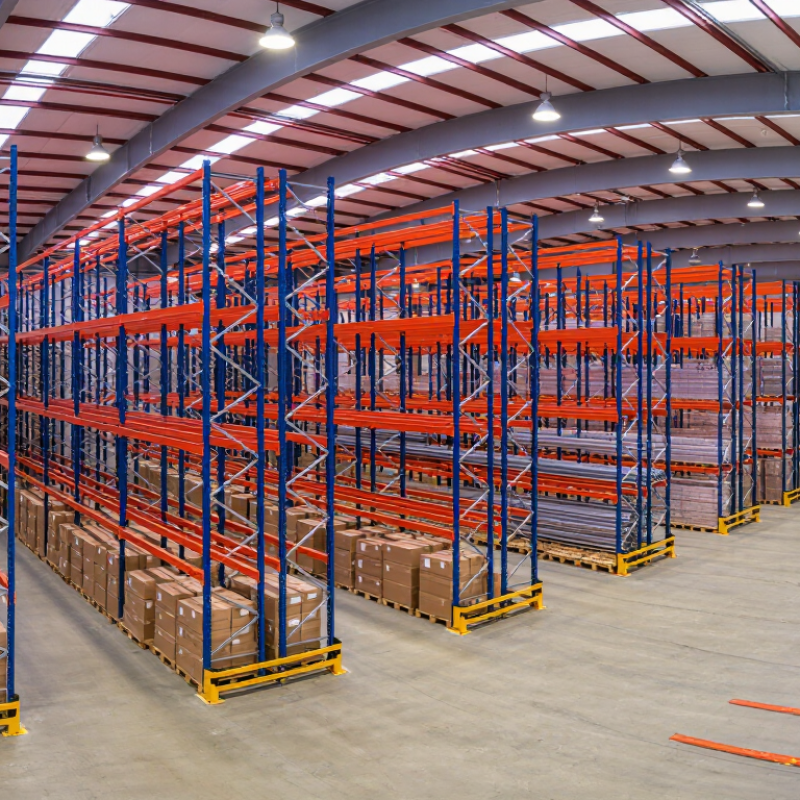
Selective pallet racks suit mixed inventory and frequent forklift access. They offer direct access to every pallet, but require wider aisles.

Drive-in racks store large quantities of identical goods with fewer access points. They work well for seasonal products, though stock rotation needs careful control.

Narrow-aisle racks increase vertical capacity. They demand accurate forklift operation and suitable floor conditions.

Cantilever racks support long materials such as pipes, timber, and metal profiles. Their open arms make loading simpler, especially for irregular items.

Boltless shelving fits cartons, spare parts, and manual picking areas. It is practical for lighter loads, but workers may overload it without noticing.

Mezzanine systems create an upper storage level above existing space. They can reduce expansion costs, yet require structural review, guardrails, stairs, and clear emergency routes.

In warehouse projects, I have found that capacity figures alone are not enough. Forklift turning space, pallet dimensions, and local safety requirements often change the design.

Every beam should display its rated load. Inspectors should check damaged uprights, loose connectors, and uneven floors regularly.

A rack may look stable. It may still be unsafe.

Global buyers should request drawings, material details, installation guidance, and inspection records before purchasing. Product flow also matters: slow-moving stock does not need the same access as daily orders.

Key Features That Define the Best Warehouse Storage Racks

The best warehouse storage racks begin with the building, not the catalog. From site inspections, I have seen strong racks fail when floors were uneven or aisles were too narrow. Measure ceiling height, slab condition, forklift routes, and emergency access before choosing a system. Adjustable beams help when pallet sizes change. Clear labels also reduce loading mistakes.

Load capacity must match pallet weight, dimensions, and stacking height. Ask for tested load data, installation drawings, and inspection guidance. Do not trust appearance alone. Uprights should resist impact, while beams need secure locking connections. Protective guards are valuable near busy forklift lanes. In humid facilities, coated or corrosion-resistant materials can extend service life. Local building and workplace requirements still need review.

Good rack design supports safe movement and efficient picking. Wide-span levels may suit bulky cartons, while denser layouts can improve floor use. However, maximum density is not always better. Workers may reach awkwardly, and damaged pallets can create hidden risks. A monthly inspection can identify bent frames, loose anchors, or missing safety pins. Photographs make follow-up easier. No rack is perfect. Even a carefully specified system may need changes after real operations begin. Pilot one aisle, collect operator feedback, and revise the layout before expanding across the warehouse.

10 Best Warehouse Storage Racks for Global Buyers - Key Features That Define the Best Warehouse Storage Racks

Rank Rack Type Typical Load Capacity Typical Height Typical Depth Recommended Aisle Width Selectivity Best Application Key Features
1 Adjustable Pallet Rack 500–4,500 kg per level 2.4–12 m 0.9–1.2 m 3.0–3.8 m Very high General pallet storage and mixed-SKU warehouses Adjustable beam levels, direct access to every pallet, scalable layout, compatible with forklifts
2 Drive-In Rack 500–1,500 kg per pallet position 3–10 m 1.2–1.5 m per lane 2.8–3.5 m operating aisle Low to medium High-density storage of uniform products Forklifts enter storage lanes, high cube utilization, last-in-first-out inventory flow
3 Double-Deep Rack 800–2,000 kg per pallet position 4–11 m 2.0–2.4 m for two pallets deep 3.2–4.0 m Medium Facilities requiring more density than standard pallet rack Two pallets stored behind one another, reduced aisle count, requires reach or double-deep handling equipment
4 Pallet Flow Rack 500–1,500 kg per pallet position 2.4–9 m 2.4–3.6 m 3.0–4.0 m on each face High Perishable goods and first-in-first-out inventory Gravity rollers, separate loading and picking faces, FIFO rotation, efficient order replenishment
5 Carton Flow Rack 50–250 kg per shelf level 1.8–3.6 m 0.6–1.2 m 1.8–2.7 m High Piece picking, e-commerce fulfillment, and small cartons Inclined rollers or wheels, front-facing picking, automatic carton replenishment, strong SKU visibility
6 Cantilever Rack 250–1,500 kg per arm 2.4–7.5 m 0.6–1.5 m per arm 3.0–4.5 m High for long goods Steel bars, pipes, timber, panels, and other long loads Open-front design, unobstructed access, adjustable arms, suitable for indoor or covered outdoor areas
7 Mobile Storage Rack 300–1,500 kg per level 2–5 m 0.6–1.2 m One active aisle, often 1.0–1.5 m High Cold stores, archives, high-value inventory, and space-constrained sites Rails or powered bases, compact footprint, high floor-space utilization, controlled access options
8 Mezzanine Rack System 250–1,000 kg per square metre 3.5–8 m total structure height 0.6–1.2 m shelving depth 1.2–3.0 m, depending on handling method High Light- to medium-duty picking and warehouse offices Uses vertical space, creates additional floor area, supports stairs, handrails, gates, and shelving
9 Narrow-Aisle Rack 500–2,000 kg per level 6–15 m 0.9–1.2 m 1.5–2.0 m Very high High-volume pallet storage with expensive or limited floor space High storage density, guided forklift travel, direct pallet access, requires specialized equipment
10 Automated Storage and Retrieval Rack 500–1,500 kg per pallet position 6–40 m 0.8–1.5 m per load position Typically 1.5–2.0 m machine aisle Very high High-throughput, controlled-environment, and labor-intensive operations Computer-controlled storage and retrieval, high vertical utilization, accurate inventory tracking, reduced manual travel

Note: Capacity, dimensions, aisle widths, and operating heights are typical planning ranges. Final specifications should be verified against load size, building conditions, equipment requirements, local regulations, and applicable rack design standards.

How to Compare Rack Capacity, Layout, and Access Requirements

10 Best Warehouse Storage Racks for Global Buyers

For global buyers, rack comparison should begin with the load, not the catalog photograph. Record pallet weight, dimensions, turnover rate, and lifting method from actual operations. A rack rated for 1,000 kilograms may not suit uneven loading, beam deflection, or forklift impact. Include the pallet, packaging, and any temporary load in calculations. Leave a safety margin supported by a qualified engineer or inspector. Numbers matter most.

Map columns, doors, sprinklers, emergency paths, and forklift turning circles before selecting a frame. A dense layout can add storage positions while reducing travel efficiency and visibility. Measure aisle width with the intended truck, including load overhang. Do not trust a floor plan alone. Mark one aisle at full scale with tape; the result may challenge the drawing.

Access needs should guide the rack type. Direct access suits varied stock and frequent picking, while deeper storage may suit stable, uniform pallets. Compare first-in, first-out requirements, replenishment speed, inspection space, and damaged-load removal. Check beam adjustability, floor anchoring, corrosion protection, and spare-part availability in the destination country. A lower purchase price can hide slower handling and difficult maintenance. Some estimates will remain imperfect, especially when future inventory is uncertain. Recheck them after observing one normal work shift.

Safety, Durability, and Compliance for Global Warehouse Buyers

10 Best Warehouse Storage Racks for Global Buyers

Safety, Durability, and Compliance for Global Warehouse Buyers

Choosing warehouse storage racks for international operations requires more than comparing price and capacity. Buyers should verify beam loads, frame thickness, anchoring methods, and corrosion protection. A rack that performs well in a dry warehouse may fail faster in humid coastal conditions. Small details matter. Check the floor condition, forklift routes, ceiling height, and expected pallet weight before approving any design.

Reliable suppliers should provide load charts, installation drawings, material details, and inspection guidance. These documents help local engineers confirm compliance with regional building, fire, and workplace safety requirements. Requirements differ between countries, so one certificate rarely covers every site. Ask for traceable steel information and clear testing records. Labels should remain readable from the aisle, even after years of dust and handling.

Durability also depends on use, not only materials. Bent uprights, missing safety pins, and overloaded beams require immediate attention. Monthly visual checks can identify damage early. Annual professional inspections add another layer of control. Many buyers underestimate installation quality. A strong rack can still become unsafe when anchors are poorly fitted or frames are not aligned. No rack is maintenance-free. Budgeting for spare components, staff training, and future expansion makes the purchase more realistic, although these costs are often overlooked.

Selecting the Right Storage Rack for Different Warehouse Operations

Selecting warehouse racks starts with workflow, not catalog rankings. There is no universal best option. During site assessments, I check pallet weight, SKU variety, forklift turning radius, ceiling height, and replenishment frequency. A rack that fits the building may still slow picking.

Selective pallet racks suit warehouses with many SKUs and direct access needs. Drive-in racks work better for dense, low-variety inventory. Push-back racks support several pallets per lane and reduce aisle space. Pallet-flow racks help operations using first-in, first-out rotation. Carton-flow racks keep small products facing pickers. Cantilever racks suit long loads, including pipes and timber, with properly rated arms. For lightweight components, adjustable shelving may outperform heavier equipment. It sounds less impressive. But it can be faster.

Cold rooms, seismic zones, and humid locations need additional engineering review. Verify beam connections, steel thickness, floor capacity, corrosion protection, and local safety requirements. Mobile racks can increase density, but moving aisles may reduce access during peak periods. Automated systems save labor in stable operations, yet they require accurate data, trained technicians, and reliable power. A simpler layout may suit irregular stock better.

Leave clearances around sprinklers, doors, and emergency routes. Add frame protection where forklifts operate. Request load tests, installation instructions, inspection schedules, and replacement-part availability. Measure every aisle twice. Small errors can create daily congestion. Maximum capacity is not always usable capacity.