
Why Choose a Tyre Pyrolysis Machine for Recycling?
Choosing a Tyre Pyrolysis Machine can turn worn tyres into useful recovered materials through controlled thermal processing. Instead of leaving tyres in stockpiles, operators can manage them inside a monitored industrial system.
The process typically produces recovered carbon material, steel, and tyre-derived oil. Each output has different quality requirements and market limits. Good equipment includes temperature controls, sealed reactors, gas treatment, cooling systems, and emergency protection. These details matter more than impressive capacity figures.
From practical project experience, reliable performance depends on feedstock preparation, trained operators, and regular maintenance. Clean, evenly sized tyre pieces usually support steadier processing. However, results are not automatic. Moisture, contamination, and inconsistent tyre types can reduce efficiency. That point is easy to overlook.
A responsible buyer should examine independent testing, technical documentation, warranty terms, and after-sales support. The supplier should also explain energy use, emission controls, fire prevention, and residue handling clearly. Local environmental permits and workplace safety rules must guide the installation. Compliance cannot be treated as an afterthought.
The strongest reason to choose a Tyre Pyrolysis Machine is balanced resource recovery. It may reduce disposal pressure while creating materials for approved industrial applications. Still, profitability depends on local tyre supply, operating costs, product quality, and stable buyers. Careful feasibility studies remain essential.
This article examines the technology from a practical perspective. It considers environmental performance, operational reliability, maintenance needs, and investment risks. Some projects perform well. Others struggle because planning was too optimistic. That honest distinction helps readers make safer, evidence-based decisions.
What Is a Tyre Pyrolysis Machine?
Why Choose a Tyre Pyrolysis Machine for Recycling?
What Is a Tyre Pyrolysis Machine?
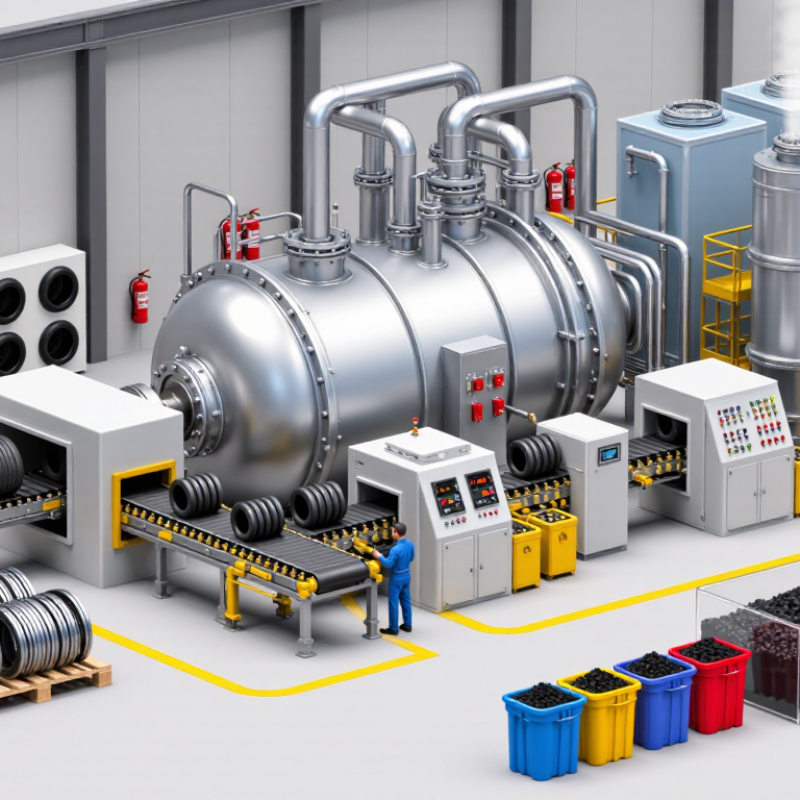
A tyre pyrolysis machine is a sealed thermal reactor. It heats used tyres without oxygen. This process breaks rubber into oil vapour, non-condensable gas, and solid char. Steel wire remains as a separate recoverable material. The vapour enters a condenser, where it becomes pyrolysis oil. The gas may support heating, reducing external fuel demand.
The scale of the challenge is significant. The World Business Council for Sustainable Development estimates that more than one billion end-of-life tyres arise globally each year. The U.S. Environmental Protection Agency has also reported millions of tyres entering waste streams annually. These figures explain the interest in controlled thermal recycling. However, pyrolysis is not automatically the best answer. Feedstock moisture, reactor design, temperature stability, and emission controls strongly affect results. Poor operation can reduce oil quality and increase maintenance.
Tips: Check the tyre feedstock before purchasing equipment. Mixed rubber, wet tyres, and excessive textile content can change the output. Ask for measured data, not only laboratory promises. Review oil yield, gas composition, char quality, energy use, and air-control performance. Independent testing is valuable. Small errors matter.
The machine also needs safe storage, fire protection, continuous monitoring, and trained operators. A practical assessment should compare transport costs, local energy prices, product markets, and permitted operating conditions. The economics may look attractive, but real projects often reveal hidden costs. That deserves careful reflection.
Why Choose a Tyre Pyrolysis Machine for Recycling?
A tyre pyrolysis machine thermally decomposes waste tyres in an oxygen-limited environment, recovering useful materials without burning the tyres. The chart shows a representative mass balance for processing 1,000 kg of waste tyres. Actual yields vary with tyre composition, operating temperature, and feedstock preparation.
Typical reported output ranges are approximately 35–45% pyrolysis oil, 30–40% recovered carbon black, 10–15% steel, and 5–15% non-condensable gas. This illustrative chart uses a balanced representative distribution totaling 1,000 kg.
How Does the Tyre Pyrolysis Process Work?
Why Choose a Tyre Pyrolysis Machine for Recycling?
How Does the Tyre Pyrolysis Process Work?
A tyre pyrolysis machine recycles waste tyres inside a sealed reactor with very little oxygen. The process starts with sorting and cutting tyres into manageable pieces. This preparation improves feeding and supports more even heating. Inside the reactor, controlled heat breaks rubber into vapours, solid carbon-rich material, steel, and non-condensable gas. It is not magic. The vapours pass through condensers and become tyre-derived oil. The remaining gas may support heating, reducing external fuel demand.
Temperature control matters throughout the operation. Different tyre types contain varying amounts of rubber, additives, textile, and steel. Therefore, oil yield and carbon quality can change between batches. Operators should monitor reactor temperature, pressure, cooling water, and gas lines continuously. A poorly adjusted system can produce unstable output or unnecessary emissions. Reliable equipment also needs regular inspections, calibrated sensors, and documented operating procedures. Small errors become expensive quickly.
Tips: Remove stones and excessive moisture before feeding tyres. Keep feed size consistent when possible. Check seals, filters, and condensers before each run. Store recovered oil and carbon material in suitable containers, away from ignition sources. Do not assume one setting fits every batch. Trial records help identify better operating conditions, although results may still vary. Safety training is essential, especially during start-up, shutdown, and maintenance.
What Materials and Products Does It Recover?
A tyre pyrolysis machine recovers several useful materials from end-of-life tyres. The European Tyre and Rubber Manufacturers’ Association reported about 3.6 million tonnes of waste tyres generated annually in Europe. Pyrolysis can convert the rubber fraction into pyrolysis oil, non-condensable gas, and solid char. It also separates embedded steel wire for recycling.
The solid char is usually processed into recovered carbon black, often called rCB. It can support rubber compounds, coatings, inks, and plastics, but quality varies. ASTM D8171 testing helps assess its ash, volatile matter, and carbon content. The oil contains hydrocarbons that may serve as industrial feedstock or process fuel after suitable treatment. Gas can heat the reactor itself.
Small details matter. Clean, well-shredded tyres usually improve feeding and heat transfer. Textile fibres may remain in the char and reduce its value. Product yields also change with tyre composition, temperature, residence time, and condensation design. Industry reviews commonly report oil yields near 35–45%, char near 30–40%, and gas near 10–20%, though these figures are not universal.
The process is not magic. A laboratory result may not survive continuous operation. Operators should verify moisture, emissions, steel purity, and product testing through independent records. Data from the European Tyre and Rubber Manufacturers’ Association and peer-reviewed pyrolysis studies provide useful benchmarks, not guaranteed production results.
What Are the Environmental and Economic Benefits?
Why Choose a Tyre Pyrolysis Machine for Recycling?
What Are the Environmental and Economic Benefits?
Waste tyres are too valuable to bury or burn without recovery. The European Tyre and Rubber Manufacturers’ Association reports about 3.9 million tonnes of end-of-life tyres arise annually in Europe. Its recent management data also shows recovery rates above 90% in many European markets. A tyre pyrolysis machine can process suitable tyres in a controlled, oxygen-limited chamber. It produces recovered carbon material, steel, and pyrolysis oil. These outputs can replace part of the virgin raw materials used in manufacturing.
The environmental benefit depends on operation, not machinery alone. Proper feedstock sorting reduces moisture and contamination. Sealed systems, gas cleaning, and continuous monitoring can limit visible smoke and uncontrolled emissions. The U.S. Environmental Protection Agency reported 290 million scrap tyres generated in the United States in 2018. That volume shows the need for practical recovery routes. Pyrolysis can also reduce landfill pressure and recover steel that would otherwise be lost. Small details matter.
Economically, operators may earn from several product streams instead of one disposal fee. Recovered steel has established industrial demand, while oil may support heating or further refining. Carbon quality remains inconsistent. This is the uncomfortable part. Poor temperature control can create unstable products and weak margins. The International Energy Agency and circular-economy assessments repeatedly stress energy efficiency, traceability, and lifecycle measurement. A careful feasibility study should test local tyre supply, product specifications, permits, energy use, and transport costs before investment.
Why Choose a Tyre Pyrolysis Machine for Recycling? — Environmental and Economic Benefits
Typical technical ranges for end-of-life tyre pyrolysis. Actual results depend on tyre composition, reactor design, operating conditions, feedstock preparation, product specifications, and environmental controls.
| Data Dimension | Typical Value or Range | Environmental Relevance | Economic Relevance | Important Conditions |
|---|---|---|---|---|
| Recovered tyre steel | Approximately 10–15% of tyre mass | Diverts steel from disposal and reduces the need for virgin steel feedstock when the recovered material meets recycling specifications. | Creates a saleable secondary raw material and reduces the amount of residue requiring disposal. | Steel should be separated, cleaned, and handled according to the requirements of the receiving recycler. |
| Pyrolysis oil yield | Approximately 35–45% by mass | Converts part of the tyre’s hydrocarbon content into a liquid product instead of sending the material to landfill or uncontrolled combustion. | Can provide a revenue stream as an industrial fuel or chemical feedstock after testing and, where required, upgrading. | Composition and quality vary. Use may be subject to fuel, emissions, storage, and waste-product regulations. |
| Recovered carbon-rich solid | Approximately 30–40% by mass | Recovers carbon-containing material that may partially replace virgin carbon materials in suitable applications. | May be sold as recovered carbon material, filler, or a fuel component, depending on quality and market requirements. | Additional milling, classification, pelletizing, or surface treatment may be needed for higher-value applications. |
| Non-condensable gas | Approximately 5–15% by mass | Using the gas internally can reduce the need for externally purchased process fuel and may improve overall resource efficiency. | Internal use can lower operating-energy costs and reduce dependence on natural gas or other purchased fuels. | Gas cleaning, safe handling, pressure control, and combustion equipment are essential. |
| Typical operating temperature | Approximately 400–700°C | Thermal decomposition occurs in a controlled, oxygen-limited environment, avoiding direct burning of the whole tyre. | Operating conditions affect product yields, energy consumption, throughput, and equipment design. | Temperature range varies by reactor technology and desired product distribution; it is not a universal operating specification. |
| Material recovery from one metric tonne of tyres | Roughly 350–450 kg oil; 300–400 kg carbon-rich solid; 100–150 kg steel; 50–150 kg gas | One tonne of waste tyres can be converted into several material and energy streams rather than being disposed of as a single waste product. | Multiple outputs diversify potential income and can reduce dependence on one commodity market. | These figures are indicative ranges and may not total exactly 1,000 kg because of moisture, textile content, process losses, and variation in feedstock. |
| Landfill and stockpile diversion | Up to the full processed tyre input, subject to process residues | Reduces long-term stockpiling risks, including fire hazards, pest habitats, and the loss of recoverable materials. | May reduce disposal, storage, and transport costs where local waste regulations charge for end-of-life tyre handling. | Actual benefit depends on collection systems, plant availability, residue management, and compliance with local regulations. |
| Resource-efficiency benefit | Three principal outputs: liquid hydrocarbons, carbon-rich solid, and steel, plus process gas | Supports material recovery and energy recovery within a circular-economy model. | Allows a facility to serve several downstream markets instead of relying only on tyre disposal fees. | End markets must be verified before investment; product quality and local demand determine commercial value. |
| Potential emissions advantage | Lower impact is possible, but no universal percentage applies | A well-designed plant with gas cleaning, vapour condensation, leak control, and continuous monitoring can avoid uncontrolled emissions associated with open burning or poorly managed disposal. | Efficient emission-control systems can support permitting, operational continuity, and long-term market access. | Environmental performance must be demonstrated through site-specific measurement and life-cycle assessment; pyrolysis is not automatically low-carbon. |
| Main economic value drivers | Feedstock cost, product yield, product quality, energy use, labour, maintenance, and compliance costs | Efficient sorting, heat recovery, and pollution control can improve resource efficiency and reduce avoidable losses. | Profitability depends on the combined value of recovered products and any applicable collection or disposal fees, not on oil yield alone. | Market prices, permitting requirements, financing, logistics, and plant utilisation should be included in a feasibility study. |
Data note: The ranges shown are general industry ranges for mixed end-of-life tyres and should be treated as indicative rather than guaranteed plant performance.
Reference framework: Product composition and environmental considerations are consistent with publicly available information from the U.S. Environmental Protection Agency, the European Tyre and Rubber Manufacturers’ Association, and established waste-tyre recycling practices.
How to Choose the Right Tyre Pyrolysis Machine?
Why Choose a Tyre Pyrolysis Machine for Recycling?
Choosing the right tyre pyrolysis machine requires more than comparing advertised capacity. The U.S. EPA reported about 274 million scrap tyres generated in 2017. ETRMA also reported European collection and recovery above 95% in recent statistics. These figures show a large feedstock base, but supply quality still changes by region. A practical buyer should inspect local tyre types, moisture levels, steel content, and daily availability. Mixed passenger and truck tyres can affect feeding, heating, and product consistency. Start with a realistic capacity, not the largest number in a brochure.
Check the reactor design, heating control, condensation system, and gas recycling route. Ask for measured oil, carbon black, steel, and gas results from comparable tyres. Request operating logs, not only laboratory samples. The USTMA’s 2023 End-of-Life Tire Report estimated a 71% recovery rate for U.S. scrap tyres in 2021. That recovery pressure makes stable operation important. Confirm emissions controls, temperature monitoring, emergency shutdowns, and maintenance access before signing a contract. A machine that needs frequent manual cleaning may reduce real output. It may look efficient on paper.
Also calculate energy use per tonne, labour needs, cooling-water demand, and residue handling costs. Independent inspection can verify weld quality, insulation, instrumentation, and safety systems. Ask whether the supplier supports commissioning and operator training. Do not assume every quoted yield applies to your feedstock. That assumption often fails. A lower-capacity system with reliable uptime may outperform a larger machine with repeated stoppages. Check local permits and waste-handling requirements with qualified authorities before installation.
