What Is a Vaccine Bag and How Does It Work?
A vaccine bag is more than a soft carrier. It is a controlled transport system for temperature-sensitive medical products. Vaccine Bags help shield vials from heat, freezing conditions, light, moisture, and accidental impact. Their role begins after storage and continues through clinics, mobile teams, and emergency outreach sites.
Dr. Kate O’Brien, Director of the World Health Organization’s Department of Immunization, Vaccines and Biologicals, has emphasized, “Vaccines must reach people safely and effectively.” That principle also applies to packaging. A reliable vaccine bag may include insulated walls, cold packs, dividers, temperature indicators, and tamper-evident closures. Each feature serves a practical purpose. A loose vial can break. A frozen pack can damage sensitive vaccines. A warm interior can shorten product life.
The details matter.
This article explains how Vaccine Bags work and why their design influences cold-chain performance. It will examine insulation materials, pack placement, temperature monitoring, cleaning requirements, and safe handling practices. The discussion also considers reusable and single-use designs. Not every bag performs equally well. Some products look durable but offer limited thermal protection. Others maintain temperature effectively but become heavy during long transport.
That is where careful evaluation becomes essential. Buyers should review validated temperature data, capacity, durability, and manufacturer instructions. Real conditions can be messier than laboratory tests. Delayed transport, frequent opening, and incorrect pack conditioning may reduce protection. A bag cannot correct every cold-chain mistake. It can, however, make safe vaccine transport more consistent when selected and used properly.
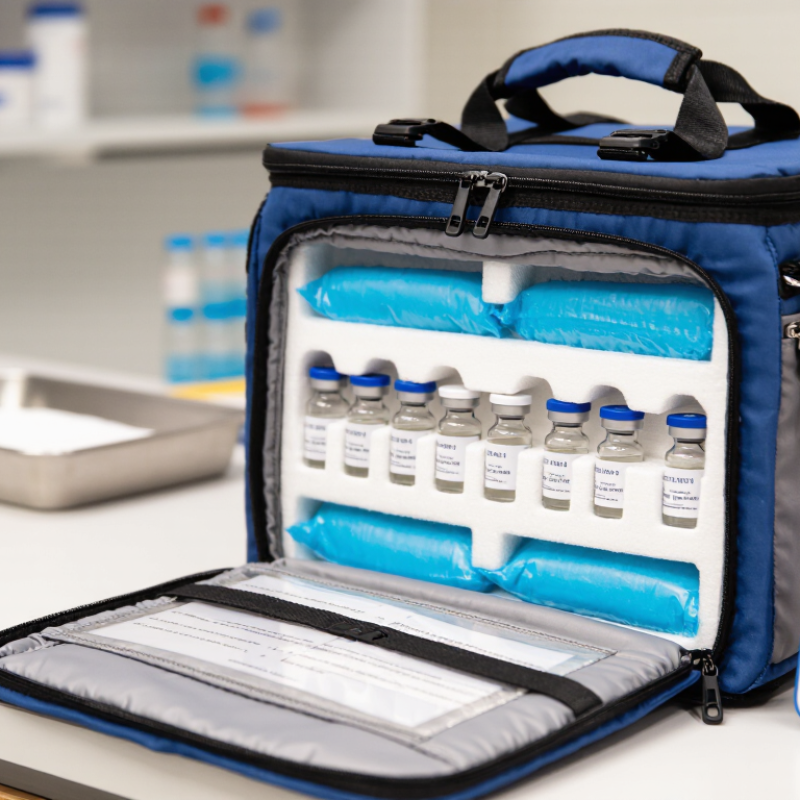
Vaccine Bags Defined: Insulated Containers for 2–8°C Cold-Chain Transport
What Is a Vaccine Bag and How Does It Work?
Vaccine Bags Defined: Insulated Containers for 2–8°C Cold-Chain Transport
A vaccine bag is an insulated container designed to protect temperature-sensitive vaccines during transport. Most routine vaccines require storage between 2°C and 8°C, unless official product instructions state otherwise. The bag slows heat transfer from the surrounding air. It does not actively cool the contents like a refrigerator.
Inside, insulated walls work with conditioned gel packs or phase-change materials. These cooling elements absorb incoming heat and help maintain a stable internal range. A trained handler should condition them correctly. Frozen packs can damage vaccines that must not freeze. This detail is easy to overlook.
Packing matters. Vaccines should remain separated from direct contact with frozen cooling elements. A temperature monitor placed near the payload can record changes during transit. Staff should check the reading before dispatch, at delivery, and after unexpected delays. The bag should stay closed as much as possible, especially in hot weather.
Reliable cold-chain practice also depends on preparation, not just equipment. The container should be qualified for its intended route, load size, and transport time. Instructions should explain how to pack, clean, inspect, and document it. The process is not foolproof. A small gap in the insulation, an unconditioned pack, or repeated opening can shorten the safe window. When a temperature excursion occurs, the vaccines should be isolated and assessed by qualified personnel before use.
Components and Materials: Insulation, Coolants, Liners, and Data Loggers
A vaccine bag is a qualified transport container designed to protect temperature-sensitive doses during short journeys. Its performance depends on several parts working together. Insulation, often made from foam or layered thermal material, slows heat transfer from the surrounding air. It does not create cold. Coolants provide that cooling effect. Frozen packs may be unsuitable for some vaccines because they can create freezing zones. Phase-change coolants may offer steadier temperatures, but only within their tested range. The correct coolant depends on the product, route, and expected exposure time. Small gaps matter.
A liner helps separate the contents from coolant surfaces and reduces the risk of leaks or direct contact. It may also keep the interior cleaner when condensation appears. The data logger records temperature at chosen intervals. Its location is important. A logger placed beside a coolant may record a colder reading than the vaccine itself. It should be positioned near the payload and checked for calibration, battery life, and alarm settings. Loading should follow the validated packing pattern, not personal guesswork. A bag can look secure and still fail after hours in a hot vehicle. That is an uncomfortable detail. Reviewing temperature records, packing errors, and delayed handovers can reveal weaknesses that visual checks miss. No component works perfectly alone. Proper training, documented procedures, and careful monitoring remain essential.
How They Work: Limiting Heat Transfer and Stabilizing Internal Temperature
A vaccine bag is an insulated carrier designed to protect temperature-sensitive vaccines during transport. It uses layered materials, cold packs, and a carefully arranged interior. The goal is not to make the bag cold. It is to keep vaccines within a safe temperature range for as long as possible. This supports reliable handling between a clinic refrigerator and an outreach site. Small details matter. A warm vehicle, open zipper, or loose lid can change performance.
The bag limits heat transfer in three ways. Insulation slows conduction from the warmer outside surface. Reflective layers may reduce radiant heat entering the carrier. A sealed structure also limits air movement, reducing convection. Cold packs absorb incoming heat as they warm, helping stabilize the internal temperature. They do not cool forever. Placement matters, because direct contact with frozen packs may damage some vaccines. Temperature monitoring provides evidence, not guesswork. However, readings can be missed, and one measurement cannot describe every corner. No carrier is perfect.
Tips: Precondition cold packs according to vaccine instructions. Use barriers between packs and vaccines when required. Keep the bag closed and shaded. Avoid overpacking it. Use a calibrated temperature monitor, record readings, and inspect the carrier before each trip. If temperatures leave the approved range, separate the vaccines and seek guidance from qualified health professionals. Never assume appearance proves potency.
What Is a Vaccine Bag and How Does It Work?
Vaccine bags use insulating materials and conditioned cold packs to reduce heat transfer. Lower thermal conductivity generally means slower heat movement, helping the interior remain within the commonly recommended vaccine storage range of 2°C to 8°C during transport.
Representative thermal conductivity values at approximately 20–25°C. Values vary with density, moisture, temperature, and material construction. Lower values indicate better resistance to heat transfer.
Performance Criteria: WHO PQS Testing, 2–8°C Control, and Freeze Protection
What Is a Vaccine Bag and How Does It Work?
A vaccine bag is a portable cold-chain container for short-distance vaccine transport. It uses insulation, conditioned ice packs, and internal barriers. These parts slow heat gain and prevent direct contact with frozen packs. A digital temperature logger can reveal hidden temperature excursions during delivery.
WHO Performance, Quality and Safety (PQS) testing evaluates cold life under controlled conditions. For many vaccine-carrier specifications, the benchmark is at least 15 hours at 43°C ambient temperature. The payload, pack arrangement, and opening frequency also matter. Passing a laboratory test does not guarantee perfect field performance. Routes are rough. Handoffs are rarely ideal.
Most temperature-sensitive vaccines require 2–8°C storage, according to WHO guidance. Freeze protection is equally important. A conditioned ice pack should feel cold, not rock-hard, before loading. Separators must stop frozen surfaces from touching the vials. One unnoticed frozen vial can compromise product quality, even when the bag looks normal.
The WHO and UNICEF Estimates of National Immunization Coverage reported 14.5 million zero-dose children in 2023. Reliable last-mile transport remains essential. Staff should record departure time, arrival time, ambient conditions, and logger readings. A small gap in documentation can weaken an otherwise strong cold-chain process. The bag is only one control point. Human handling still decides much of the outcome.
Sources: WHO PQS Performance Specification E003/VAC01; WHO/UNICEF Estimates of National Immunization Coverage, 2023.
Step-by-Step Use: Conditioning, Packing, Monitoring, and GDP-Compliant Handling
What Is a Vaccine Bag and How Does It Work?
A vaccine bag is an insulated carrier designed to protect temperature-sensitive doses during short journeys. Its performance depends on preparation, not appearance. Before packing, freeze ice packs according to the handling instructions. Then condition them until surface frost disappears and liquid movement becomes noticeable. This step reduces the risk of freezing refrigerated vaccines. Most routine refrigerated vaccines require 2°C to 8°C, according to the CDC Vaccine Storage and Handling Toolkit.
Place a temperature monitor inside the bag, near the vaccines, without touching cold packs. Use a buffer layer, such as cardboard or bubble wrap, between packs and vials. Pack tightly, limit empty space, and record the dispatch time. The WHO and UNICEF Effective Vaccine Management guidance links temperature control failures with substantial vaccine wastage; WHO has reported that up to 50% of vaccines may be wasted globally, with logistics among the contributing factors. That figure is a warning, not a packing target.
During transport, check the monitor at defined intervals. Keep the bag closed and away from direct sunlight, vehicle heaters, and freezing surfaces. On arrival, compare the reading with the approved range and document the receiver, time, and condition. If a temperature excursion occurs, quarantine the affected doses and seek qualified release advice. Do not guess. GDP-compliant handling also requires traceability, calibrated equipment, deviation records, and trained personnel. In practice, rushed conditioning remains a weak point, even in experienced teams. Real operations are rarely perfect. A missing time entry can matter later.