


China Top HDPE Tarpaulin Manufacturers and Suppliers?

China is an important sourcing destination for buyers comparing HDPE tarpaulin manufacturers and suppliers. The market includes factories with different equipment, product ranges, and quality-control practices. A supplier’s catalog can look convincing. Details matter more. Hdpe Tarpaulin is typically made from woven high-density polyethylene fabric, often with a protective coating. Buyers should compare fabric weight, thickness, UV treatment, color options, and expected service conditions. These specifications affect handling and durability, but they do not guarantee identical performance across products.

This guide introduces factors to review when shortlisting Chinese manufacturers. Look for clear product data, consistent sample quality, and practical answers about production capacity and customization. Ask how seams are formed, how eyelets are fitted, and what inspection steps are used before shipment. Request relevant test reports when performance claims are important, and check that the documents match the product being offered. Samples help, though they may not represent every production batch. That is worth remembering. Clear communication about dimensions, packing, lead times, and defect handling can prevent avoidable surprises. Some supplier profiles provide limited technical detail, so buyers may need to ask follow-up questions. This overview is a starting point, not a substitute for verifying a supplier’s claims. Comparing evidence rather than relying on rankings can lead to a more informed sourcing decision.
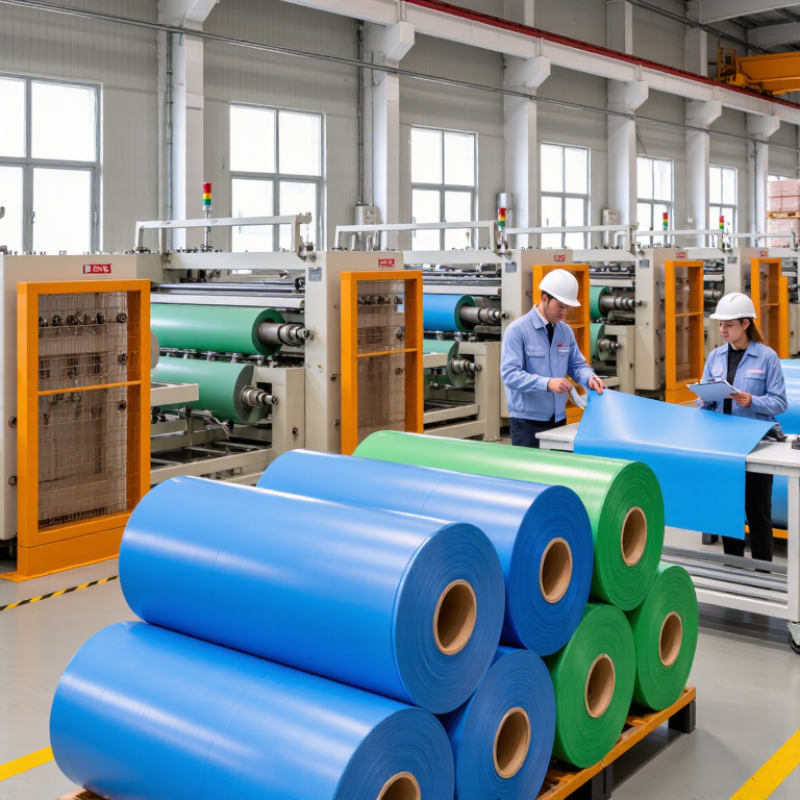
China Top HDPE Tarpaulin Manufacturers and Suppliers?

What HDPE Tarpaulins Are and How They Are Made

HDPE tarpaulins are flexible sheets made from high-density polyethylene, a lightweight plastic valued for strength and moisture resistance. Their base fabric is woven from narrow plastic tapes, crossing lengthwise and widthwise to form a grid. This structure helps the sheet resist tearing while remaining easy to fold. The weave is then commonly coated or laminated with polyethylene to reduce water penetration and protect the threads. The finished surface may feel smooth or slightly textured, depending on its construction.

Manufacturing details shape how a tarp performs. Producers may add UV stabilizers to slow sunlight damage, while reinforced hems and metal eyelets help secure the edges. A tarp used over stored materials, for example, should have firmly finished corners and eyelets spaced to suit its tie-down points.

Check the stated weight, weave density, coating, and edge construction together; one specification rarely tells the whole story. Small details matter. A heavier sheet is not automatically better if it is difficult to handle or poorly finished.

Even careful production has limits: prolonged exposure, sharp contact, and loose installation can shorten service life. That deserves a second look.

Key Properties and Common Applications of HDPE Tarpaulins

HDPE tarpaulins usually pair woven high-density polyethylene tapes with a laminated coating. The weave helps resist tearing, while the coating limits water penetration. Typical HDPE resin has a density of about 0.94–0.97 g/cm³, measured using ASTM D1505. That figure describes the resin, not the finished tarp. Fabric weight, weave, coating thickness, and seam quality all affect performance. Details matter.

UV exposure can gradually weaken exposed plastic, so outdoor tarps often include UV stabilizers. Performance still depends on sunlight, temperature, and service life. PlasticsEurope’s Plastics – the Facts 2024 reports global plastics production of 413.8 million tonnes in 2023; this is broad industry context, not a tarpaulin-specific market figure. For buyers, ask for documented fabric weight and UV-test conditions rather than relying on “heavy duty” wording alone. A tarp can still fail first at a cut edge or eyelet.

Common uses include crop and equipment covers, construction-site protection, temporary storage, and truck loads. Lightweight sheets are easier to handle, but may flap and abrade in wind. Thicker fabric can be more durable, yet awkward to fold and secure. It is an imperfect trade-off. Check seams, reinforced corners, and eyelet spacing against the actual load and exposure. A water-resistant sheet is not automatically suitable for prolonged ponding or severe weather.

China’s HDPE Tarpaulin Manufacturing Industry

China’s HDPE Tarpaulin Manufacturing Industry

China’s HDPE tarpaulin manufacturing industry draws on established plastic-processing capacity and a broad network of resin, weaving, coating, and conversion suppliers. The National Bureau of Statistics reported 74.885 million tonnes of plastic products output in 2023, down 3.0% year on year. This figure covers many product types; it is not a tarpaulin-specific measure. The OECD estimated global plastics production at 460 million tonnes in 2019, providing wider context for the industry’s material base.

Manufacturers typically weave HDPE tapes into fabric, then apply a coating, often LDPE, to improve water resistance. Buyers should check fabric weight, coating uniformity, seam strength, and UV-test conditions rather than relying on appearance alone. A roll may look tough under warehouse lighting, yet vary at the hems or eyelets. One limitation is that public data rarely separates HDPE tarpaulins from other plastic products, making precise market comparisons difficult.

Tips: Request a current specification sheet and a sample from the same production run. Ask how UV exposure and tensile strength are tested. Clarify whether stated weight includes the coating. Small details matter.

Leading HDPE Tarpaulin Manufacturers and Suppliers in China

Leading HDPE Tarpaulin Manufacturers and Suppliers in China

China’s scale gives buyers a broad field of HDPE tarpaulin manufacturers and suppliers. Plastics Europe’s Plastics—The Fast Facts 2024 reports that China produced 33.3% of global plastics in 2023. This figure covers plastics broadly, not tarpaulins alone, but it helps explain the country’s deep converting and materials base. That matters.

A capable supplier should explain fabric weight, weave density, coating thickness, and UV-stabilization options in measurable terms. Ask for recent test results, not only a catalogue specification. For outdoor use, inspect sample edges and corners; weak sealing often shows there first. Request roll-width tolerances and production-lot traceability, too. These details make comparisons more useful than a low quoted price.

Factory visits or independent inspections can reveal coating consistency and packaging practices. Still, a polished sample may not match every production roll. That risk deserves attention. Ask how the supplier checks tensile strength, water resistance, and color variation across batches, and clarify the test method behind each claim. A sound partnership also depends on clear lead times, sample approval, and written defect procedures. The market is large, but supplier quality is not uniform.

China Top HDPE Tarpaulin Manufacturers and Suppliers? - Leading HDPE Tarpaulin Manufacturers and Suppliers in China

Product or Sourcing Dimension Common Market Offering What Buyers Should Confirm
Material construction Woven high-density polyethylene (HDPE) fabric, commonly coated or laminated with low-density polyethylene (LDPE). Ask for the fabric construction and coating details; “HDPE tarpaulin” alone does not specify the full structure.
Fabric weight Many general-purpose products are offered across roughly 70–250 g/m², with lighter and heavier options also available. Confirm whether the stated weight includes coating, and request a production sample or test report.
Width and length Roll goods and cut-to-size sheets are commonly available; dimensions depend on the supplier’s equipment and order requirements. Specify finished dimensions, tolerances, roll width, and whether seams or hems affect the usable size.
Color and opacity Common choices include blue, green, silver, white, and customized colors; opacity varies by color and construction. Approve a color sample and state any requirements for light transmission or color consistency.
UV resistance UV-stabilized options are offered for outdoor use; service life depends on formulation, exposure, climate, and handling. Request the UV test method and test results. Do not treat a stated service life as guaranteed without defined conditions.
Edges and eyelets Finished sheets may include reinforced hems and metal or plastic eyelets; spacing and materials vary by specification. Confirm eyelet material, spacing, corner reinforcement, and hem construction on the approved drawing or sample.
Performance testing Relevant checks can include tensile strength, tear resistance, coating adhesion, water resistance, and dimensional inspection. Agree on test methods, acceptance limits, sampling frequency, and whether testing is performed by an independent laboratory.
Customization and packaging Suppliers may offer custom sizes, printing, hems, eyelets, folding, and export packaging, subject to order details. Request a written specification, packaging plan, sample approval process, and confirmation of any minimum order quantity.
Supplier evaluation Manufacturing capability, quality controls, export experience, and product consistency can differ between suppliers. Compare recent test reports, samples, production capacity, lead time, inspection terms, and references relevant to the intended application.

Note: The ranges and options above describe general market offerings, not guaranteed specifications for any individual supplier. Confirm all requirements in a written product specification before placing an order.

How to Evaluate and Choose a Chinese HDPE Tarpaulin Supplier

China Top HDPE Tarpaulin Manufacturers and Suppliers?

How to Evaluate and Choose a Chinese HDPE Tarpaulin Supplier

When comparing Chinese HDPE tarpaulin suppliers, start with the intended use, not the lowest quote. A cover for outdoor storage may need stronger UV resistance than a temporary indoor sheet. Ask for the fabric weight, weave density, coating details, finished size, and expected use conditions. Request a sample and check its edges, grommets, seams, and surface for uneven coating or loose threads. Small details matter. A polished sample is useful, but it does not prove every production batch will match.

Tips: Ask how the supplier checks incoming yarn, coating thickness, dimensions, and finished seams. Request recent inspection records or test reports, and confirm what each result measures. Clarify sample approval, production lead time, packaging, and how defects are handled. Get specifications in writing.

Communication quality is part of supplier evaluation. Send a clear specification sheet and see whether the supplier flags missing details, such as color tolerance or corner reinforcement. Vague answers deserve follow-up. Compare quotations only after confirming they cover the same material, dimensions, packaging, and inspection level. Factory photos can offer context, but they are not a substitute for documentation or a sample. No evaluation is perfect; a first order may still reveal gaps in communication or consistency. Keep written records of approved samples and agreed tolerances before production begins.

How to Evaluate and Choose a Chinese HDPE Tarpaulin Supplier

Suggested evaluation weights for comparing suppliers (not measured supplier-performance data).

Prioritize product quality and consistency, then verify relevant test reports, material specifications, UV and weathering performance, production capacity, lead times, and total landed cost. Adjust the weights to match your product requirements and purchasing priorities.