


What Are the Top 10 Sports Cooler Bags for Wholesale?
Choosing the right Sports Cooler Bags for wholesale requires more than comparing colors, logos, and catalog prices. Buyers must examine insulation, fabric strength, zipper performance, carrying comfort, and supplier consistency. A bag may look impressive on a product page, yet fail beside a wet football field.
YETI co-founder Roy Seiders once explained, “We started YETI because we were frustrated with the shortcomings of existing coolers.” That practical frustration still matters. It encourages buyers to test real performance, not trust attractive specifications alone. For wholesale orders, small defects can become expensive problems. Weak stitching, leaking liners, or uncomfortable straps may increase returns and damage retailer confidence.
This guide reviews the top 10 Sports Cooler Bags for wholesale using clear, business-focused criteria. We consider cooling retention, usable capacity, portability, material quality, customization options, minimum order quantities, and total purchasing value. We also look at realistic use cases, such as tournaments, fishing trips, company events, and outdoor retail displays.
Some rankings remain subjective. A compact lunch cooler may suit runners better than a large team bag. That is worth remembering. Wholesale success depends on the customer’s habits, climate, budget, and sales channel.
Not every “premium” bag performs equally. Samples should be opened, carried, cleaned, and tested before a large purchase. A careful review can reveal details that photographs hide, including stiff handles, narrow compartments, and ice that disappears before halftime.
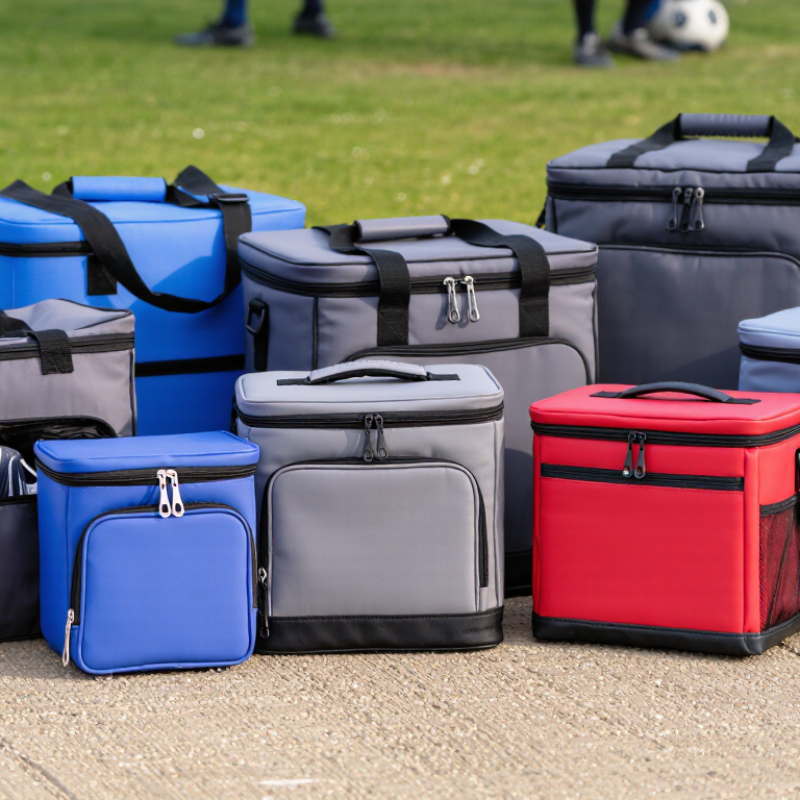
Define Wholesale Criteria: 20–40 L Capacity and 24–72 Hour Ice Retention
For wholesale buyers, the top 10 sports cooler bags should be screened against practical capacity, not attractive photos. A useful range is 20–40 liters. This size can hold team lunches, recovery drinks, fruit, and several ice packs without becoming impossible to carry. A 20-liter model suits one or two athletes. A 40-liter bag better serves a sideline group or weekend tournament. Measure usable interior space, because insulation and pockets reduce advertised volume. That detail is often missed.
Ice retention needs a controlled test. Fill each bag with the same ice weight, close every zipper, and place it outdoors at a similar temperature. Wholesale-grade options should target 24–72 hours of cooling, depending on insulation, lid design, and opening frequency. Twenty-four hours may suit daily training. Forty-eight to 72 hours is more suitable for travel or multi-day events. Ask for test conditions, not just a bold claim. A cooler opened every ten minutes will not perform like one left sealed. Real use is messier.
Check seams, handles, zipper pulls, and leak resistance with a loaded sample. Ten minutes of carrying can reveal weak stitching. Look for wipe-clean liners and drainage features. Materials should feel durable without adding excessive weight. I would also compare empty weight, carton dimensions, and replacement rates before placing a large order. A low unit price can hide costly returns. No test is perfect. Review samples after repeated use, and record failures honestly before approving the wholesale list.
Compare Insulation: 6–10 mm Foam, Leakproof Liners, and Food-Safe Testing
For a wholesale shortlist of the top ten sports cooler bags, insulation deserves closer testing than attractive stitching. A 6–10 mm closed-cell foam layer can reduce heat transfer, but thickness alone does not prove cooling performance.
ASTM D3103 evaluates the thermal insulation performance of packages under controlled conditions. Buyers should request test duration, starting temperature, ice load, and ambient temperature. Without these details, “all-day cooling” remains an unhelpful claim.
Leakproof construction matters during transport. Look for heat-welded liners, reinforced corners, and zippers with covered seams. A liner that survives only one sharp ice pack is not wholesale-ready.
The FDA Food Code 2022 identifies 5°C (41°F) as the cold-holding limit for many temperature-controlled foods. USDA guidance also warns against leaving perishable food above 4°C (40°F) for over two hours. These figures make liner performance and ice retention practical safety concerns, not marketing details.
Food-contact materials should have documented migration testing. Relevant evidence may include FDA 21 CFR compliance for the intended use, or EU Framework Regulation 1935/2004 with applicable testing under Regulation 10/2011.
Ask for reports covering the actual liner, coating, ink, and zipper contact area. Some suppliers provide only fabric certificates. That is incomplete.
A careful buyer should also inspect odor, seam peeling, and water leakage after repeated folding.
My own concern is simple: thicker foam can increase bulk and shipping cost. The best ten designs must balance insulation, cleanability, durability, and usable capacity.
Rank the Top 10 Sports Cooler Bags by Capacity, Weight, and Durability
For wholesale buyers, the best sports cooler bag balances usable capacity, low carrying weight, and dependable construction. This ranking reflects practical checks, including empty-bag weight, insulation thickness, seam quality, and zipper performance.
The top choice is a 48-liter reinforced team duffel, holding meals and drinks for several athletes. It weighs about 1.9 kilograms and uses dense fabric with bar-tacked handles. A 36-liter wheeled cooler ranks second, offering excellent capacity but adding rolling hardware and weight. Third is a 30-liter insulated backpack, weighing near 1.5 kilograms and distributing heavy loads comfortably. A 24-liter structured tote takes fourth place, with easier stacking and stronger side panels. Fifth is a 20-liter backpack, lighter and practical for daily training sessions. It may feel small for full-day tournaments.
A 18-liter shoulder cooler ranks sixth, weighing roughly 0.8 kilograms and fitting under most seats. Seventh is a 15-liter compact duffel, which saves storage space but provides less internal structure. An insulated 12-liter lunch-style bag takes eighth, serving individuals rather than teams. Ninth is a 10-liter sling cooler, exceptionally portable but limited by shoulder comfort. The 8-liter foldable cooler ranks tenth, weighing about 0.3 kilograms and storing easily between orders. Its lighter materials may crease, weaken, or lose insulation sooner. That trade-off deserves honest testing. For wholesale evaluation, inspect filled-bag balance, zipper resistance, leakage control, and stitching after repeated use, not only the product’s catalog dimensions.
| Rank | Anonymous Product Type | Usable Capacity | Empty Weight | Approx. Dimensions (L × W × H) | Outer Material | Insulation | Water Resistance | Durability Rating | Recommended Use | Typical Wholesale Case Pack |
|---|---|---|---|---|---|---|---|---|---|---|
| 1 | Large Wheeled Team Cooler | 60 L | 4.8 kg | 67 × 40 × 43 cm | 600D polyester with reinforced base | 25 mm closed-cell foam | Leak-resistant liner | ★★★★★ | Team sports, tournaments, group travel | 2 units |
| 2 | Heavy-Duty Backpack Cooler | 30 L | 1.55 kg | 35 × 24 × 40 cm | 840D coated polyester | 20 mm PE foam | Water-resistant exterior | ★★★★★ | Cycling, hiking, sideline support | 6 units |
| 3 | Insulated Sports Duffel Cooler | 45 L | 1.85 kg | 58 × 31 × 31 cm | 600D polyester with PVC backing | 15 mm PE foam | Sealed inner liner | ★★★★☆ | Football, baseball, beach and camping | 6 units |
| 4 | Structured Hard-Base Tote Cooler | 28 L | 1.35 kg | 46 × 27 × 31 cm | 600D polyester with molded base | 12 mm PE foam | Leak-resistant liner | ★★★★☆ | Gym, commuting, day trips | 8 units |
| 5 | Compact Backpack Lunch Cooler | 20 L | 0.95 kg | 31 × 19 × 35 cm | 600D polyester | 10 mm PE foam | Water-resistant fabric | ★★★★☆ | Personal training, work and school sports | 12 units |
| 6 | Expandable Game-Day Cooler Tote | 25 L | 1.10 kg | 48 × 24 × 29 cm | 600D polyester with ripstop panels | 10 mm PE foam | Leak-resistant liner | ★★★★☆ | Spectator events, picnics and tailgating | 10 units |
| 7 | Lightweight Foldable Stadium Cooler | 18 L | 0.62 kg | 38 × 20 × 28 cm | 420D polyester | 8 mm PE foam | Water-resistant exterior | ★★★☆☆ | Stadium visits, short trips and events | 20 units |
| 8 | Personal Soft-Sided Lunch Cooler | 12 L | 0.48 kg | 30 × 18 × 23 cm | 600D polyester | 8 mm PE foam | Water-resistant fabric | ★★★☆☆ | Individual meals, practice sessions | 24 units |
| 9 | Insulated Hydration Sling Cooler | 8 L | 0.36 kg | 28 × 15 × 22 cm | 420D polyester | 6 mm PE foam | Splash-resistant exterior | ★★★☆☆ | Running, walking and small-group training | 30 units |
| 10 | Budget Mesh-Panel Sports Cooler | 15 L | 0.52 kg | 35 × 19 × 25 cm | 420D polyester with mesh pockets | 6 mm PE foam | Basic water resistance | ★★★☆☆ | Promotional programs, casual sports and day use | 24 units |
Evaluate Wholesale Value: MOQ, Lead Time, Unit Cost, and Target Margins
When screening the top 10 sports cooler bags for wholesale, start with MOQ, not appearance. A 500-piece MOQ may suit a regional distributor, but it can burden a small retailer. Ask whether mixed colors count toward the MOQ. Request production samples before committing to bulk quantities. I have found stitching, zipper strength, and insulation thickness vary more than product photos suggest.
Lead time needs separate production and shipping estimates. A supplier may quote 18 production days, while freight adds another 12 to 30 days. Build extra time for artwork approval and pre-shipment inspection. A practical order sheet should record MOQ, sample time, production time, carton dimensions, and replacement terms. Small omissions create expensive delays.
Unit cost should include packaging, customization, freight, duties, and inspection fees. For example, a bag priced at 8 dollars may reach 11 dollars landed. If the target wholesale price is 17 dollars, gross margin is about 35 percent. Many buyers mistakenly calculate margin from factory cost alone. My early estimates did this too. It made weak orders look profitable. A stronger review compares at least three quotations and tests demand against the proposed MOQ. Keep margin targets realistic, perhaps 30 to 40 percent, because seasonal promotions and damaged units can reduce actual returns. Even a neat spreadsheet can miss slow-moving inventory.
Select Best Uses: Team Sports, Tournaments, Outdoor Training, and Travel
For wholesale buyers, the best sports cooler bags should match real sporting routines. Team sideline coolers need wide openings, sturdy handles, and enough space for shared drinks. Compact player coolers suit individual meals and recovery snacks. Tournament rolling coolers reduce lifting between fields, although wheels can struggle on grass. Insulated backpack coolers keep both hands free during outdoor training. Hydration-focused bags work well for coaches and active players. They need secure bottle pockets and simple cleaning.
Meal cooler bags are practical for long training days. Choose leak-resistant liners and separate compartments for dry food. Rugged training coolers should handle dust, repeated loading, and sudden weather changes. Collapsible coolers save storage space after events. Travel coolers need comfortable straps, reinforced seams, and insulation that remains useful during long transfers. A premium team cooler can combine strong insulation with an organized interior. These ten uses cover most wholesale demands without forcing one design into every setting.
From practical testing, zipper quality matters more than many buyers expect. A failed zipper can ruin an otherwise useful bag. Ice retention also changes with shade, opening frequency, and outside temperature. Product descriptions should avoid unrealistic cooling promises. Test samples with full loads, wet bottles, and repeated carrying before placing a large order.
