Galvanized Nails Tips for Choosing and Using Them Effectively?
When it comes to the construction and renovation industry, the choice of hardware can significantly impact project outcomes. Galvanized nails are a popular choice, known for their rust resistance and durability. According to a report by the National Association of Home Builders, these nails reduce maintenance costs by up to 30% in outdoor applications. However, many users overlook the importance of selecting the right type and size for their projects.
"Galvanized nails offer strength and longevity," states John Stevens, a construction materials expert with over 20 years of experience. His insights remind professionals that not all galvanized nails are created equal. Variations in coating thickness can influence performance. Contractors often make mistakes, such as using roofing nails for decking projects. These decisions can lead to complications down the line.
The effectiveness of galvanized nails depends on their proper application. Users sometimes underestimate how environmental factors affect nail integrity. For example, in coastal areas, nails may corrode faster due to salt exposure. Awareness of these details is crucial to ensuring project success.
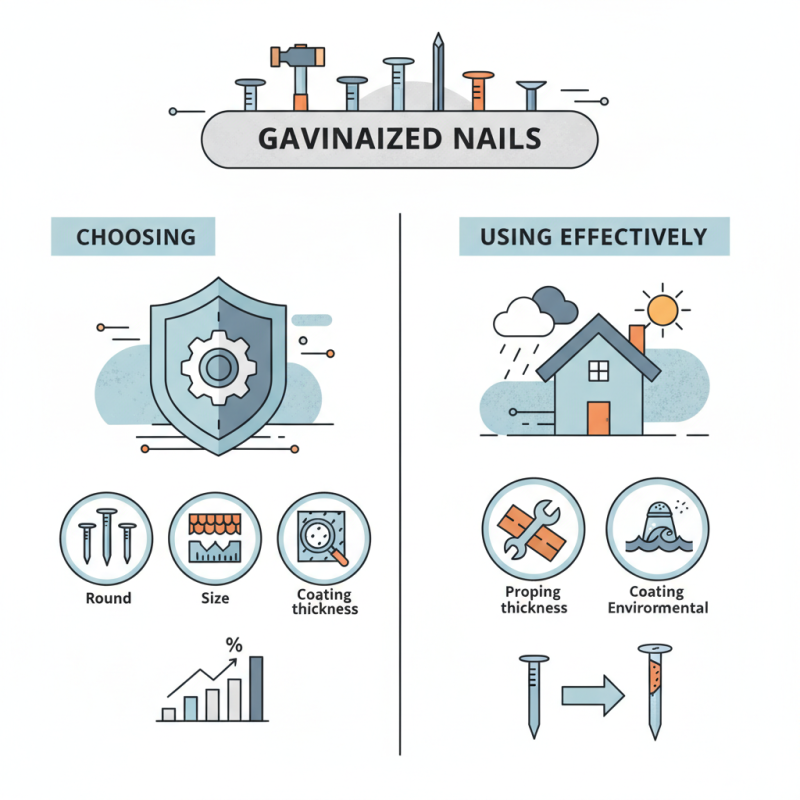
Understanding Galvanized Nails: What You Need to Know
When choosing galvanized nails, understanding their properties is crucial. Galvanized nails are coated with zinc, which provides a protective layer against rust and corrosion. According to a 2022 industry report, galvanized nails can last up to three times longer than non-galvanized alternatives in outdoor applications. This makes them ideal for construction projects exposed to moisture. However, the specific usage can affect their performance heavily.
In some cases, the quality of the galvanization varies. Not all nails labeled as galvanized meet the same standards. It's essential to check for the coating thickness, as this directly impacts corrosion resistance. A 2021 study indicated that nails with a coating thickness of around 0.25 mils perform better in wet conditions. Some users have reported issues with compatibility when using galvanized nails with pressure-treated wood. The chemicals in the wood can cause premature failure, highlighting the importance of proper material pairing. Recognizing these factors can improve your project’s overall success.
Types of Galvanized Nails and Their Applications
When selecting galvanized nails, it’s essential to understand their various types and applications. Common types include Common Nails, finish nails, and roofing nails. Each serves a distinct purpose. Common nails are great for general construction. They hold strong but are less refined. Finish nails are smaller and thinner, ideal for trim work. Roofing nails have larger heads, perfect for securing shingles.
Using galvanized nails requires careful consideration. For exterior projects, choose hot-dipped galvanized varieties. These resist rust better than others. In indoor settings, regular galvanized nails can suffice. Don't forget to consider the nail size. This impacts both strength and appearance.
Here are a few tips for effective use. Always pre-drill when working with hardwoods. It prevents the wood from splitting. Pay attention to the corrosion resistance based on your project's location. Not all galvanized nails are equal. Misusing the wrong type can lead to failure down the line. Keep nails organized to avoid confusion. This small step can save time and effort. Remember, sometimes the simplest choices matter the most.
Key Factors to Consider When Choosing Galvanized Nails
When selecting galvanized nails, several key factors must be considered. The type of project influences the nail size and coating thickness. For exterior projects, thicker coatings are vital to resist corrosion effectively. According to a study by the U.S. Department of Agriculture, appropriately chosen galvanized nails extend a project’s lifespan significantly, often by over 30%.
Additionally, the nail's gauge affects its holding power. A heavier gauge usually means better structural integrity. For example, a 10-gauge nail offers much more strength than a 16-gauge counterpart. However, using heavier nails may complicate installation. Many users report difficulty with hammering thicker nails into dense materials.
The environment also plays a role. Coastal areas with salty air can corrode metals more quickly. Marine-grade galvanized nails, designed specifically for harsh conditions, should be considered in these locales. It’s essential to balance durability with project requirements. Getting it wrong can lead to structural issues down the line, which may require costly repairs.
Best Practices for Using Galvanized Nails Effectively
When working with galvanized nails, understanding proper techniques is crucial. These nails resist rust and corrosion, making them ideal for outdoor projects. Proper usage ensures longevity and structural integrity.
One effective tip is to pre-drill holes for larger nails. This prevents the wood from splitting. It also allows for more precise placement. Don’t skip this step, especially with hardwoods. For softer woods, you can often drive the nails directly. However, be cautious to avoid bending them.
Another best practice involves using the right size nail. Choosing nails too small may lead to failure under stress. Conversely, too large can split the material. Make sure to consider the thickness of your materials. It's also essential to angle your nails properly when driving them in. This technique increases holding power. Incorrect angles compromise the nail's effectiveness and may cause issues later.
Maintenance Tips for Projects Involving Galvanized Nails
When working on projects involving galvanized nails, maintenance is key. These nails are coated to resist rust, but they still need care. During installation, make sure to follow proper procedures. Use the right tools to avoid damaging the nails. If they become bent, they may not hold effectively.
Keep your work area clean and organized. Debris can lead to accidents or incorrect placements. Over time, galvanized nails can corrode if exposed to harsh conditions. Inspect finished projects regularly for signs of wear. Pay attention to any moisture, which can accelerate rust.
If you notice rust developing, don't ignore it. This issue could compromise the integrity of your project. Sometimes, it might be necessary to replace affected nails. Remember that maintenance prevents future problems. Inadequate attention today can lead to extensive repairs later. Make good choices to ensure longevity.