


7 PEM Electrolyzer Buying Tips for Global Buyers
Choosing a PEM Electrolyzer for an international project involves more than comparing rated output or advertised efficiency. Buyers need to match system capacity with the actual hydrogen demand, operating hours, water quality, and available electrical supply. A unit sized for future growth may sit underused today. A smaller system may limit expansion later.
Details matter. This guide outlines seven practical buying tips for global buyers, from checking operating conditions and stack life to evaluating controls, maintenance access, and supplier support. Request clear performance data at defined temperatures, pressures, and load ranges. Ask what is included in the quoted package, since purification, cooling, power electronics, and installation requirements can change the total cost. Compare warranty terms carefully, including exclusions and the process for handling replacement parts.
A polished specification sheet is useful, but it rarely shows every operating challenge. Confirm lead times, commissioning support, spare-parts availability, and service response before placing an order. Local technical requirements and project standards can also affect equipment selection; verify them with qualified advisers and relevant authorities. Not every supplier will provide equally detailed evidence. If a claim cannot be explained or documented, pause and ask follow-up questions. The right choice is not always the highest-capacity model or the lowest initial price. It is the system whose documented performance, service plan, and operating limits fit the project. These tips help buyers ask sharper questions and make a more informed comparison.
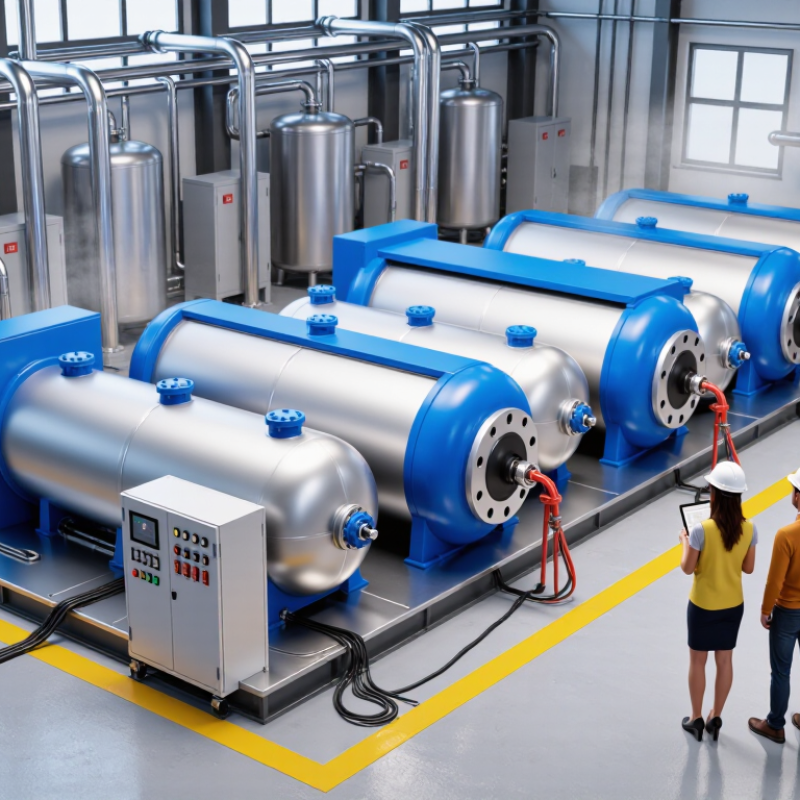
Understanding PEM Electrolyzer Technology and Its Applications
A PEM electrolyzer uses a proton-conducting membrane to split treated water into hydrogen and oxygen. Its compact stack can respond quickly to changing power, making it useful alongside variable wind or solar generation. Not magic, though. Rapid response does not remove the need to check operating limits, water treatment, and balance-of-plant requirements.
The IEA’s Global Hydrogen Review 2024 reports that global installed water-electrolysis capacity reached about 1.4 GW by the end of 2023. This remains a small base for a technology attracting major project announcements, so buyers should distinguish operating references from planned capacity. IRENA’s Green Hydrogen Cost Reduction report notes PEM’s operational flexibility, while highlighting the cost implications of materials used in its components. For a purchasing assessment, ask for performance data across expected load ranges, not just a peak-efficiency figure. Also compare hydrogen output pressure, water-quality specifications, service intervals, and stack replacement assumptions.
Applications include supplying hydrogen for chemical production, refining, and emerging low-emissions steel processes. A site with intermittent renewable power may value fast ramping; a steady industrial plant may prioritize lifetime cost and predictable maintenance. The awkward part: project models often depend on electricity prices that change. Test the economics against local power profiles, and request evidence from installations with similar duty cycles.
PEM Electrolysis: Theoretical Mass Balance per 1 kg of Hydrogen
The reaction 2H₂O → 2H₂ + O₂ requires about 8.94 kg of water and produces about 7.94 kg of oxygen for every 1 kg of hydrogen. Actual systems also need water treatment and may use additional water for other processes.
Defining Capacity, Hydrogen Purity, and Operating Requirements
Defining capacity starts with the demand curve, not the largest number on a supplier’s specification sheet. Estimate daily hydrogen use, peak hourly demand, and planned downtime. Then check whether the electrolyzer can follow renewable-power swings without sacrificing output or service life. The IEA’s Global Hydrogen Review 2024 reported that announced electrolyzer projects could exceed 520 GW by 2030, yet only about 4% had reached a final investment decision. Announcements are not operating capacity. Leave room for project delays.
Purity requirements depend on the final use. For fuel-cell road vehicles, ISO 14687 specifies hydrogen quality with a minimum purity of 99.97%, alongside limits for individual contaminants. Ask for a complete impurity analysis, not just a headline purity figure. Confirm whether the quoted value applies at the stack outlet or after drying and purification. Small details matter. A sample port, calibrated analyzer, and clear acceptance test can prevent costly disputes.
Operating conditions deserve equal attention. Specify feedwater quality, inlet pressure, ambient temperature, ramp rates, and expected start-stop cycles. Check whether the plant needs hydrogen storage to bridge low-power periods or demand spikes. A smaller unit may look efficient on paper but struggle with peak loads; an oversized unit may sit idle. One point worth questioning: are the supplier’s performance figures based on your expected operating profile, or ideal test conditions? Get that distinction in writing.
Comparing Efficiency, Durability, and System Integration
7 PEM Electrolyzer Buying Tips for Global Buyers
Compare electricity use at the same hydrogen pressure, purity, and operating load. IRENA’s 2020 report, Green Hydrogen Cost Reduction, cites electrolyzer consumption of roughly 50–83 kWh per kilogram of hydrogen. That wide range makes system boundaries crucial. Ask for separate figures covering the stack, rectifier, cooling, water treatment, and compression. Small differences matter.
Durability needs equal scrutiny. The U.S. Department of Energy’s PEM electrolysis technical targets list 80,000 operating hours as a lifetime target, not a guarantee for every commercial unit. Request degradation data, stack replacement assumptions, and warranty terms for your expected operating pattern. A system tested under steady power may behave differently with variable renewable electricity. Ask for partial-load evidence.
Check integration before comparing prices. Confirm water quality, delivery pressure, ramp rate, footprint, cooling requirements, control interfaces, and grid connection needs. Require acceptance tests that measure electricity use and hydrogen output together across startup, standby, and load changes. One caveat: datasheets rarely show every operating condition. Independent testing can help expose gaps between rated performance and usable output.
Checking Certifications, Supplier Experience, and After-Sales Support
A PEM electrolyzer quote can look complete while leaving important gaps. Ask for the exact certificate scope, issuing body, test date, and equipment model. ISO 22734 covers hydrogen generators using water electrolysis, but it does not replace destination-specific checks for electrical, pressure, and site requirements. Request independent test records and confirm that the certified configuration matches the unit offered. Paperwork matters.
Supplier experience needs evidence, not broad claims. Ask for operating references, commissioning records, stack service history, and performance under changing loads. The IEA’s Global Hydrogen Review 2024 reports that electrolyzer manufacturing capacity reached about 25 GW per year in 2023, with announced capacity potentially exceeding 165 GW per year by 2030. Those figures describe manufacturing capacity, not proven field performance. Capacity is not experience. Check how many comparable systems are actually operating, and ask what failed during commissioning; the answer may be more useful than a polished presentation.
After-sales support should be measurable. Put response times, remote diagnostics, spare-part availability, warranty terms, and escalation contacts in writing. Ask where critical parts are stocked and how long a replacement stack typically takes to arrive. One awkward question is worth asking: who helps your site at 2 a.m.? A supplier may offer strong engineering, yet weak local support can still delay recovery. I would also verify references directly; a short call often reveals details missing from formal documents.
Evaluating Total Cost, Delivery, and Local Service Across Markets
An electrolyzer quote is only the entry point. Compare delivered cost per usable kilowatt, not factory price alone. Include freight, insurance, import handling, commissioning, water treatment, power conditioning, and initial spare parts. Small omissions add up. The IEA’s Global Hydrogen Review 2024 reports global electrolyzer manufacturing capacity at about 25 GW per year in 2023, while announced capacity for 2030 is far higher. More supply may widen buyer choice, but it does not guarantee timely delivery or local support.
IRENA’s Green Hydrogen Cost Reduction report estimated electrolyzer costs at roughly USD 500–1,000 per kilowatt, depending on technology and region. Treat this as a historical benchmark, not a current tender price. Request a cost breakdown covering shipment terms, installation, replacement components, and expected service visits. Ask suppliers to confirm delivery milestones in writing, including factory testing, port arrival, and commissioning. A late shipment can leave crews and site equipment waiting.
Local service matters after installation. Check whether trained technicians can reach the site, how quickly critical spares can arrive, and which party handles troubleshooting remotely. A paper warranty can look reassuring, but it does not show who arrives when a controller fails on a hot afternoon. Compare response times and spare-parts lists across markets. Some costs remain uncertain; power prices, water quality, and customs delays can shift the real operating picture.
| Buying tip | What to evaluate | Evidence to request | Buyer action |
|---|---|---|---|
| 1. Compare total cost, not just equipment price | Include the electrolyzer, power supply, water treatment, cooling, gas drying and purification, compression, installation, commissioning, and ongoing maintenance. Clarify which equipment and services are inside the quoted system boundary. | An itemized quotation with exclusions, utility requirements, expected service intervals, consumables, and stated energy-consumption basis. | Compare offers at the same hydrogen output, delivery pressure, purity specification, operating profile, and system boundary. |
| 2. Verify performance at your operating conditions | Assess hydrogen production rate, electrical consumption, outlet pressure, product quality, operating temperature, and turndown limits. Performance depends on system design and test conditions. | Guaranteed performance figures, test methods, measurement boundaries, operating conditions, and acceptance-test procedures. | Have the supplier state whether power figures cover the stack alone or the complete system, including balance-of-plant loads. |
| 3. Match output and flexibility to the power supply | Check whether the proposed system can follow the expected load profile, including start-up, shutdown, ramping, minimum load, and any limits on cycling. Renewable power variability can affect operation and output. | Operating-envelope data, ramp and turndown specifications, start-up requirements, and control-system descriptions. | Provide representative power-availability data and confirm the design works with the intended grid, renewable, or hybrid supply. |
| 4. Check water and utility requirements | PEM electrolysis requires purified water. The theoretical water consumption is about 9 kg per kg of hydrogen produced; actual site demand can be higher because of purification, cooling, and other system needs. | Water-quality limits, expected water consumption, treatment-system scope, cooling requirements, and site utility specifications. | Test the available water supply and confirm local treatment, discharge, and utility provisions before finalizing the design. |
| 5. Build a realistic delivery and commissioning plan | Lead time depends on equipment scope, manufacturing capacity, customization, shipping, import procedures, site readiness, and commissioning resources. | A milestone schedule covering design approval, production, factory testing, shipment, customs documentation, installation, and acceptance testing. | Confirm delivery terms, responsibilities for transport and import clearance, and the site conditions required before shipment. |
| 6. Confirm local service and spare-parts support | Evaluate response arrangements, technician availability, remote diagnostics, training, spare-parts access, and support across the operating life of the plant. | Written service scope, escalation process, support hours, training plan, spare-parts list, and warranty terms applicable in the destination market. | Identify who will provide on-site support locally and clarify travel, labor, parts, and response-time arrangements in the contract. |
| 7. Review safety, compliance, and acceptance criteria | Requirements vary by jurisdiction and project design. Review applicable electrical, pressure-system, hydrogen-handling, building, and environmental rules, as well as site permitting needs. | Applicable conformity documentation, safety-system descriptions, risk assessments, operating manuals, and factory and site acceptance-test criteria. | Ask local engineering and regulatory specialists to verify requirements early, and make measurable acceptance criteria part of the purchase agreement. |
