How to Choose a Cast Resin Transformer?
Choosing a Cast Resin Transformer is not a simple matter of comparing power ratings. The correct decision depends on load behavior, installation conditions, safety expectations, and long-term operating costs. A unit that looks suitable on paper may struggle in a hot, dusty, or poorly ventilated room.
Transformer specialist John J. Winders Jr. offers a practical principle: “A transformer must be selected for the system, not merely for its rating.” This idea should guide every technical review. Examine the required kVA, primary and secondary voltages, impedance, insulation level, cooling method, and short-circuit strength. Also check local temperature, altitude, humidity, and available maintenance access. Small details matter. A narrow enclosure can restrict airflow. Incorrect cable termination can create avoidable stress.
A Cast Resin Transformer is often selected for indoor substations, commercial buildings, hospitals, renewable-energy facilities, and industrial plants. Its dry-type insulation reduces fire-related concerns and avoids liquid leakage. However, it is not automatically the best option for every project. Noise, harmonics, overload cycles, and purchase cost still require careful evaluation. Sometimes the cheapest quotation becomes expensive after installation changes or repeated thermal alarms.
A reliable selection process uses verified test data, recognized standards, qualified engineers, and realistic site measurements. Request routine test reports and confirm the manufacturer’s service capability. Review warranty conditions carefully. Do not accept vague promises. The final choice should balance safety, efficiency, resilience, and future expansion, while admitting one uncomfortable truth: even a well-designed transformer can perform poorly when the surrounding system is misunderstood.
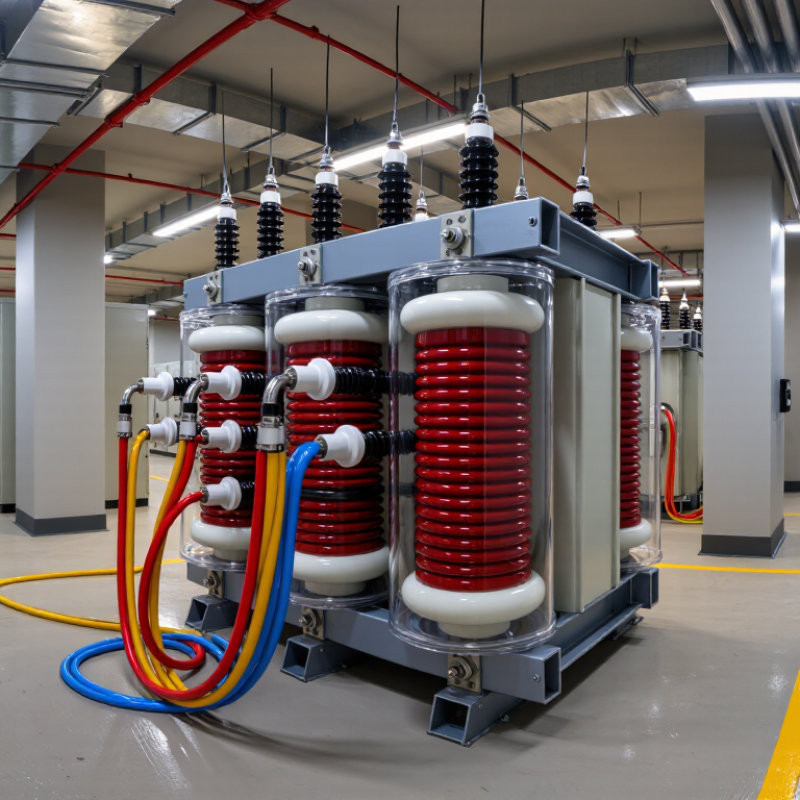
Define the Electrical and Operating Requirements
How to Choose a Cast Resin Transformer?
Define the Electrical and Operating Requirements
Start with the actual electrical profile, not the preferred transformer rating. Record primary and secondary voltage, frequency, phase configuration, load diversity, starting current, and future capacity. A transformer serving variable-speed drives may need a higher K-factor or harmonic evaluation. IEEE 519-2022 provides planning guidance for harmonic voltage and current distortion, although it does not replace a site-specific study.
Calculate continuous demand and short-duration overloads separately. A 1,000 kVA unit may appear suitable, yet motor starting can cause unacceptable voltage dips. Check impedance, fault current, protection settings, and coordination with upstream equipment. Cast resin windings tolerate moisture better than many conventional dry-type designs, but they still require correct ventilation and thermal clearances.
Operating conditions deserve equal attention. Confirm ambient temperature, installation altitude, enclosure rating, dust exposure, salt contamination, and indoor noise limits. IEC 60076-11 covers dry-type transformer requirements, including temperature-rise and insulation considerations. The U.S. Department of Energy reports that distribution transformer losses consume roughly 60 billion kWh annually in the United States. Efficiency matters, especially for continuously energized facilities.
Specify cooling mode, tap range, sound level, and allowable temperature rise before requesting quotations. Harmonics and unbalanced loading can quietly increase heating. A clean load schedule can still be wrong. Recheck measurements during peak operation, and leave practical room for expansion rather than relying on optimistic forecasts.
Compare Transformer Ratings, Materials, and Enclosure Options
Choosing a cast resin transformer starts with matching ratings to the real electrical load. Do not size the unit from today’s average demand alone. Review continuous load, motor starting current, harmonics, ambient temperature, and future expansion. A transformer with insufficient thermal margin may run hot, shorten insulation life, and create avoidable maintenance problems. Voltage ratio, frequency, insulation level, and impedance must also match the installation. A small detail can become an expensive correction.
Material selection affects reliability in different ways. Cast resin windings resist moisture, dust, and many indoor contaminants. They suit hospitals, commercial buildings, tunnels, and industrial rooms where liquid insulation is unsuitable. However, resin does not remove every risk. Poor ventilation, blocked cooling paths, or heavy harmonic currents can still increase temperature. Inspect the resin surface, terminals, supports, and enclosure clearances during evaluation. One common mistake is focusing on insulation strength while overlooking heat dissipation.
Tips: Compare rated power with measured peak demand. Check temperature-rise data, not only headline efficiency. Choose an enclosure by location: ventilated metal protection may suit clean indoor areas, while higher protection helps dusty or damp spaces. Confirm cable entry, access for inspection, noise limits, and fire-safety requirements. Ask for routine test records and installation guidance. It is tempting to choose the most protected enclosure, but excessive restriction can reduce cooling and complicate servicing. That trade-off deserves a careful review.
Evaluate Installation Conditions and Environmental Protection
Choosing a cast resin transformer starts with the room around it, not only its electrical rating. Measure the available floor area, access route, ceiling height, and ventilation path. A unit may fit the design drawing but fail through a narrow doorway or during maintenance.
Check ambient temperature, humidity, dust, salt, and chemical exposure. Cast resin windings resist moisture better than oil-filled designs, yet they are not maintenance-free. In a dusty workshop, blocked cooling channels can raise winding temperature and shorten service life. Keep clearances around the enclosure, and prevent water dripping from pipes or roofs. Small details matter.
Review the installation altitude and expected load profile. Frequent overloads, harmonic currents, or poor ventilation require careful thermal evaluation. Ask for verified temperature-rise data, insulation levels, short-circuit strength, and routine test records. A qualified engineer should confirm grounding, protection settings, fire separation, and local code compliance.
Do not assume indoor installation means a clean environment. Construction dust can enter before commissioning. Temporary protection may help, but it must not restrict airflow. One practical judgment can be difficult: a compact enclosure saves space, while a larger enclosure may improve cooling and inspection access. Recheck the decision against real operating conditions, not just the equipment schedule.
Assess Efficiency, Safety Features, and Maintenance Needs
Choosing a cast resin transformer starts with real operating conditions, not catalogue efficiency alone. Measure the expected load profile, harmonics, ambient temperature, and ventilation. A unit may appear efficient at full load but waste more energy during lightly loaded nights. The U.S. Department of Energy’s 2024 Technical Support Document projects about 3.6 quadrillion British thermal units in cumulative savings from updated transformer standards over 30 years. That figure shows why no-load losses deserve attention. Ask for guaranteed no-load and load-loss values, temperature-rise data, and test results under applicable IEC or IEEE procedures. A lower purchase price can quietly become an expensive electrical bill.
Safety needs physical verification. IEC 60076-11 classifies dry-type transformers by climate, environment, and fire behavior, including C1, C2, E1, E2, and F1 categories. Select ratings that match the room, not an ideal laboratory. Check cast-resin insulation, enclosure protection, spacing, temperature sensors, and alarm-trip coordination. Cast resin reduces fire risk, but it does not make a transformer fireproof. That distinction matters. Maintenance is simpler than with oil-filled equipment, yet it is not maintenance-free. Plan periodic cleaning, terminal-torque checks, infrared scans, and insulation or partial-discharge testing when conditions justify them. CIGRE’s Transformer Reliability Survey, Technical Brochure 642, links reliability to ageing, accessories, installation, and operating conditions. I would record baseline temperatures during commissioning. Later comparisons are more useful than one impressive factory certificate. Real sites are messier. A neglected ventilation filter can defeat a carefully selected efficiency rating.
How to Choose a Cast Resin Transformer
Efficiency, thermal performance, safety, and maintenance reference profile
Efficiency
Select a transformer that maintains high efficiency at the site's normal operating load, not only at full load. Typical cast resin designs achieve approximately 98.5–99.3% efficiency across common loading conditions.
Safety Features
Cast resin construction eliminates insulating liquid leakage. Check insulation class, enclosure protection, temperature sensors, ventilation, clearances, and protection coordination. IEC 60076-11 is the key dry-type transformer reference standard.
Maintenance Needs
Routine care normally includes annual visual inspection, cleaning of ventilation paths, checking connections, and thermographic inspection under load. Dust, humidity, vibration, and heavy loading may require shorter intervals.
Representative engineering reference values for common cast resin transformer designs. Actual performance depends on rating, cooling method, ambient conditions, installation, and loading. Reference framework: IEC 60076-1 and IEC 60076-11.
Review Compliance, Supplier Support, and Total Ownership Cost
Choosing a cast resin transformer requires more than comparing purchase prices. Verify compliance with IEC 60076-11 or the applicable IEEE C57.12.01 requirements. Ask for routine test records, temperature-rise results, insulation data, and partial-discharge measurements. Documents should identify the tested unit, not only a product family. Small detail, major difference.
Supplier support also affects total ownership cost. Request installation guidance, cooling clearances, commissioning assistance, and response times for faults. Confirm spare-part availability and warranty conditions before signing. The U.S. Department of Energy’s 2024 distribution-transformer rule estimates 3.6 quadrillion Btu in energy savings over 30 years. That figure shows why load losses deserve serious attention. Compare guaranteed no-load and load losses at your actual duty cycle, not at an ideal rating. Include testing, transport, ventilation upgrades, maintenance, downtime, and end-of-life handling. A cheaper quotation may become expensive after one overheating event. I would not treat a polished certificate as proof of low operational risk. Supplier references, factory acceptance testing, and clear escalation procedures provide stronger evidence. Even then, forecasts remain imperfect. Reference: U.S. Department of Energy, Energy Conservation Program: Energy Conservation Standards for Distribution Transformers, 2024.
How to Choose a Cast Resin Transformer? - Review Compliance, Supplier Support, and Total Ownership Cost
Comparative planning matrix for three equivalent cast resin transformer proposals | Evaluation Dimension | Option A
Standard Indoor Package | Option B
Enhanced Efficiency Package | Option C
High-Availability Package |
| Rated power | 1,600 kVA | 1,600 kVA | 1,600 kVA |
| Voltage ratio / frequency | 11 kV / 400 V, 50 Hz | 11 kV / 400 V, 50 Hz | 11 kV / 400 V, 50 Hz |
| Applicable design standard | IEC 60076-11 | IEC 60076-11; energy-loss schedule confirmed | IEC 60076-11; project-specific specification |
| Routine test documentation | Included: winding resistance, ratio, impedance, losses, dielectric tests | Included, with signed test report and loss certificate | Included, with routine and additional witnessed test options |
| Type-test evidence | Available on request | Available before purchase order | Available before purchase order; project review recommended |
| Fire and environmental characteristics | Dry-type, self-extinguishing resin system; no insulating oil | Dry-type, self-extinguishing resin system; low maintenance | Dry-type, self-extinguishing resin system; enhanced monitoring package |
| Enclosure protection | IP21 indoor enclosure | IP23 indoor enclosure | IP31 indoor enclosure; outdoor installation requires additional review |
| Guaranteed total losses at rated load | Approximately 17.5 kW | Approximately 14.5 kW | Approximately 15.5 kW |
| Typical sound pressure level | ≤68 dB(A) at 1 m | ≤66 dB(A) at 1 m | ≤64 dB(A) at 1 m |
| Cooling arrangement | AN: air natural | AN; optional forced-air cooling | AN/AF with temperature-controlled fans |
| Temperature monitoring | PT100 sensors and basic relay | PT100 sensors, relay, alarm and trip contacts | Redundant sensors, alarm/trip contacts and remote communication interface |
| Estimated manufacturing lead time | 14–18 weeks after approved drawings | 16–20 weeks after approved drawings | 20–24 weeks after approved drawings |
| Commissioning and startup support | Remote support; site visit available at extra cost | One scheduled site commissioning visit included | Site commissioning, protection review and operator training included |
| Technical response commitment | Within 2 business days | Within 1 business day | Within 4 working hours for critical issues |
| Indicative purchase price | USD 46,000 | USD 51,500 | USD 59,000 |
| Estimated annual preventive maintenance cost | USD 650 | USD 750 | USD 1,050 |
| Estimated 10-year energy-loss cost | USD 38,000 | USD 31,500 | USD 33,700 |
| Estimated 10-year total ownership cost | USD 90,500 | USD 90,500 | USD 103,200 |
| Best fit | Projects prioritizing lower initial cost and conventional indoor installation | Projects with continuous operation and strong focus on energy efficiency | Critical facilities requiring enhanced monitoring, commissioning and response support |
Cost assumptions: The 10-year ownership estimate includes purchase price, preventive maintenance and transformer energy losses. Energy-loss calculations assume an average loading of 60%, 6,000 operating hours per year, an electricity cost of USD 0.12/kWh, and a 3% annual energy-price escalation. Freight, taxes, civil works, switchgear, installation and downtime costs are excluded. Final selection should be based on the approved project specification, verified test certificates and a supplier quotation.