


How to Choose the Right Door Tensioner for Your Needs
Choosing a Door Tensioner is not simply a matter of matching its color or price. The right unit must suit the door’s weight, width, opening frequency, and mounting position. A tensioner that is too weak may let a door swing or close inconsistently. One that is too strong can make everyday use uncomfortable, especially for children or older adults. Small details matter. Measure the door, check its hinge condition, and note whether it closes against a seal or latch.
For door-control hardware, the Builders Hardware Manufacturers Association (BHMA) provides a useful performance reference. Its ANSI/BHMA A156.4 standard grades door closers by tested durability: Grade 1 is rated for 2 million cycles, Grade 2 for 1 million, and Grade 3 for 500,000. These figures help compare products in demanding settings, but they do not certify every standalone tensioner. That distinction is easy to miss. Check the manufacturer’s own specifications for compatible door sizes, adjustment range, and installation requirements.
Consider the real setting before choosing. A frequently used office entrance needs different performance from a light interior door used a few times each day. Look for clear load limits, corrosion-resistant materials where moisture is present, and adjustment instructions that match your hardware. If the door binds, rubs the frame, or has loose hinges, correct those problems first; a tensioner cannot reliably fix poor alignment. Product ratings are useful, but they are not a substitute for measuring your door and checking the installation.
Understand What a Door Tensioner Does
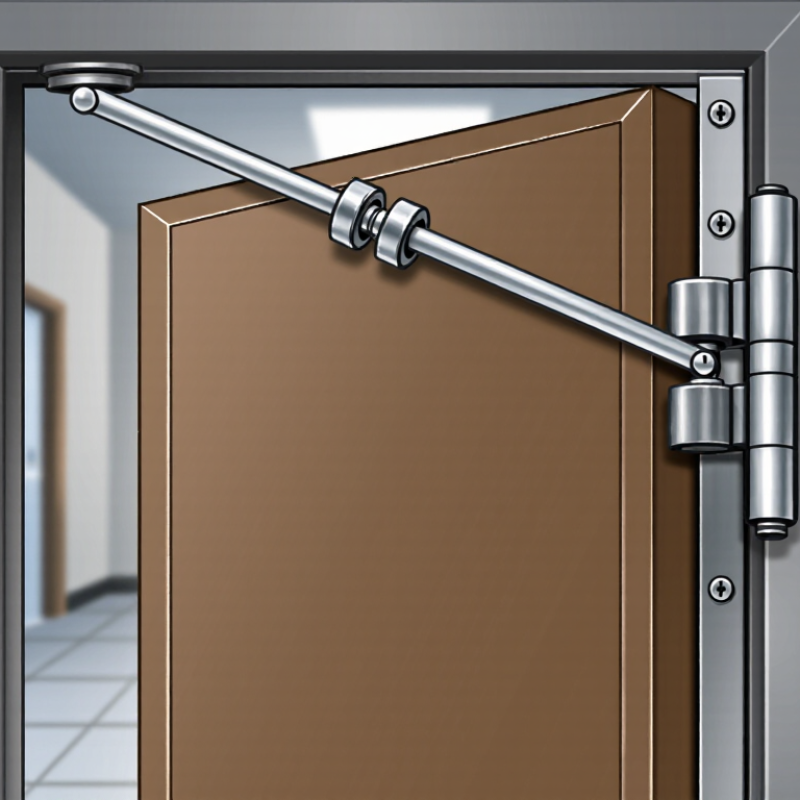
A door tensioner controls how a door moves by applying a measured force, usually through a spring or another adjustable mechanism. Depending on its design, it can help a door return to a closed position, reduce sudden slamming, or hold the door more steadily during use. The force should suit the door, not fight it. Too little tension may leave the door partly open; too much can make it difficult to open or strain its hardware.
Watch the door through a full swing. Does it drift, bounce, or close with a sharp bang? Those details help reveal what the tensioner needs to control. A lightweight screen door and a heavy entry door do not place the same demands on a device, and mounting position also affects how force is applied. Check the product’s stated door weight, dimensions, and installation requirements before choosing. A tensioner is not a substitute for a sound latch or secure hinges. I once assumed stronger tension always meant better control. It did not; the door became harder to use. Small adjustments, followed by several test cycles, often give a clearer result.
Identify Your Door Type, Weight, and Operating Conditions
A reliable door tensioner starts with the door itself, not the catalogue. Measure the leaf’s height, width, and thickness, then check its material and hinges. A solid timber door can feel very different from a lightweight hollow-core door, even at similar dimensions. Also identify whether it swings one way, both ways, or slides. Small differences matter.
Next, match the mechanism to the door’s weight and daily use. A tensioner that is too weak may let the door drift; one that is too strong can make opening uncomfortable. For a useful durability benchmark, ANSI/BHMA A156.4 classifies door closers by cycle testing: Grade 1 covers 2 million cycles, Grade 2 one million, and Grade 3 500,000. These figures describe tested closer durability, not a guaranteed service life for every tensioner. Busy corridors deserve more capacity than a rarely used storage-room door. Still, usage estimates are easy to get wrong.
Consider operating conditions, too. Wind, drafts, temperature changes, and a sloped floor can affect closing behavior. Note whether the door must close quietly, resist strong airflow, or remain easy to open for users with limited strength. The U.S. Access Board cites 5 pounds as the opening-force benchmark for interior hinged doors, with exceptions such as fire doors. Treat it as a reference, and verify the requirements that apply to your setting. Record the door’s weight if known; guessing from appearance is a weak substitute.
How to Choose the Right Door Tensioner
Typical door-weight ranges by door type (kg)
Use the actual door weight—not the midpoint shown here—to check a tensioner's rated capacity. Also consider door width, opening frequency, wind exposure, and whether the door must close against a latch. The ranges are typical estimates; individual doors vary by size and construction.
Compare Tensioner Designs and Adjustment Ranges
Door tensioners vary in how they create closing force. Spring hinges hide the mechanism in the hinge barrel and suit lighter interior doors. Many adjust through a small screw or removable pin. The range is usually limited, so check the door’s weight and hinge count before fitting. Small changes matter. A surface-mounted spring closer is easier to inspect and often offers broader tension adjustment. It can suit a frequently used screen or utility door, though its arm and mounting points need clear space.
Hydraulic closers work differently. Their controls typically regulate closing and latching speed, not simply spring tension. That distinction matters: a heavy door that slams may need speed adjustment, while a door that will not latch may need alignment or more closing force. Read the adjustment instructions carefully, and turn controls in small increments. Test the door from several opening angles. Watch for rubbing at the frame, uneven gaps, or a latch that catches only when pushed. Adjustment ranges are not universal, and forcing a screw past its stop can damage the unit. A slightly imperfect fit is common; reassess the hinges and frame before adding more tension.
Check Compatibility, Load Capacity, and Safety Features
Choosing a door tensioner starts with compatibility, not appearance. Check the door’s material, thickness, opening direction, and mounting space. Compare these details with the tensioner’s stated requirements. A unit that fits one side of a frame may not fit the other. Measure the gap and mounting points carefully; a few millimeters can matter. Also check whether the product is designed for your door’s movement and intended use.
Next, compare load capacity with the door’s actual weight and expected use. Do not treat the maximum rating as a target; leave a sensible margin, following the manufacturer’s guidance. A heavy door may need a different tension range from a lightweight interior door. Check the adjustment range too. If it is too narrow, the door may close too quickly or fail to latch. I’ve found this part easy to underestimate on paper.
Tips: Look for clear installation instructions, secure fasteners, and safety details such as pinch-point warnings. Confirm the tensioner will not obstruct handles, hinges, or nearby walkways. After installation, test the door slowly several times. Watch for uneven movement, loose hardware, or a sudden slam. Stop and reassess if anything feels unstable. A second measurement helps. Don’t guess.
How to Choose the Right Door Tensioner for Your Needs — Check Compatibility, Load Capacity, and Safety Features
| Selection Check | What to Measure or Confirm | How to Choose | Safety Consideration |
|---|---|---|---|
| Door type and mechanism | Identify whether the door is hinged, sliding, or part of another system, and determine whether the tensioner is intended to assist closing, hold a position, or perform another function. | Choose a tensioner designed for the door’s movement and application. Do not assume that a device for one mechanism will work with another. | Confirm that the device does not prevent the door from opening, closing, or latching as required. |
| Door weight and width | Record the door’s actual weight in kilograms and width in millimetres. Check the hardware instructions for any other stated limits. | Select a model whose published limits cover both the door’s weight and width. If either measurement is outside the stated limits, choose a suitably rated alternative. | Do not estimate capacity from appearance or spring strength. An unsuitable rating can cause poor operation or hardware failure. |
| Mounting compatibility | Check the mounting location, available clearance, fixing points, door material, and frame material. | Verify that the supplied or specified fixings are suitable for the door and frame, and that the installation dimensions match the available space. | Use appropriate fixings and follow the installation instructions. Weak or unsuitable mounting surfaces can loosen under repeated use. |
| Door and frame condition | Check that the door is aligned, its hinges or track operate smoothly, and the frame is secure. | Correct binding, sagging, or damaged hardware before choosing or adjusting a tensioner; these issues can affect operation and load. | A tensioner should not be used to compensate for a damaged door, loose frame, or failing hinges. |
| Adjustment range | Review the manufacturer’s stated adjustment method and operating range. | Choose a unit that can be adjusted to provide the required action without exceeding its specified range. | Adjust gradually and use the specified procedure. Excessive tension may cause abrupt movement or place extra stress on the door and fixings. |
| Controlled movement | Check whether the application requires controlled closing speed, hold-open functionality, or another movement feature. | Select only the functions needed for the door. A tensioning device does not necessarily provide the same control features as a door closer. | Check for pinch points and ensure users can operate the door safely throughout its travel. |
| Fire-door requirements | Determine whether the door is a fire door or part of a required fire or smoke-control assembly. | Use hardware approved for the specific door assembly and applicable local requirements. Confirm compatibility with the door’s certification and installation guidance. | Do not fit or adjust hardware in a way that prevents a fire door from closing and latching as required. |
| Installation and maintenance | Review installation instructions, inspection requirements, and any stated maintenance schedule. | Choose a product with clear instructions and a suitable maintenance process for the door’s frequency of use. | Periodically check fixings, alignment, and operation. Stop using the door and address any loose, damaged, or malfunctioning hardware. |
Choose a Durable Model and Confirm Installation Requirements
Choose a tensioner rated for the door’s weight, width, and daily traffic. A heavy, frequently used door needs more than a light-duty spring. For closer-style tensioners, ANSI/BHMA A156.4 classifies endurance by cycle testing: Grade 1 products are tested to 2 million cycles, Grade 2 to 1 million, and Grade 3 to 500,000. These ratings help compare durability, but they do not guarantee service life. Dirt, poor alignment, and repeated slamming still matter. A rating is only part of the decision.
Confirm the installation requirements before buying. Measure the door and frame, check available mounting space, and verify the required arm type, fasteners, and opening direction. Look closely at the installation sheet: a model may require a specific mounting position or minimum clearance. Small details matter. A screw that misses solid framing can loosen over time, while incorrect tension may make the door hard to open or prevent it from latching. If the door is unusually heavy or has a special function, ask a qualified installer to confirm compatibility. It is easy to focus on the cycle rating and overlook the fit.
