| Thermoplastic Screed Machine | Hot-melt thermoplastic paint, usually applied with a screed shoe | 100–450 mm for common lines; adjustable models can apply wider markings | Approximately 80–250 m² per hour, depending on line width, thickness, and operating speed | Longitudinal lane lines, edge lines, arrows, text, zebra crossings, and durable urban road markings | High durability Good film thickness Suitable for reflective glass beads | Requires paint heating, temperature control, and careful handling of hot material; unsuitable for cold or damp surfaces | Medium to large road, highway, airport, and municipal projects |
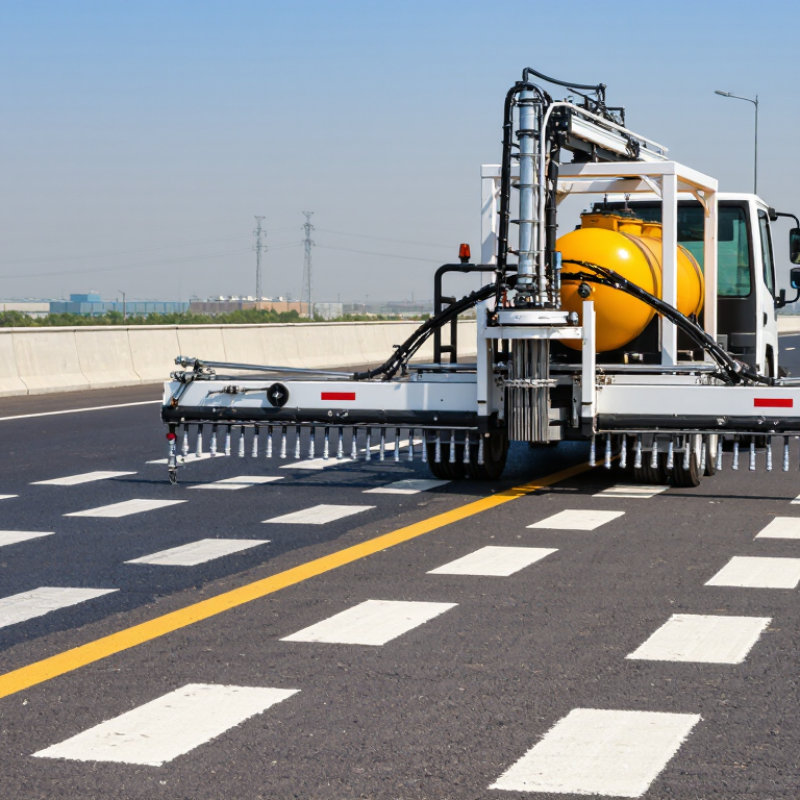
| Thermoplastic Spray Machine | Hot-melt thermoplastic paint applied by spray | Approximately 100–300 mm for standard traffic lines | Approximately 150–400 m² per hour under suitable site conditions | Fast application of long lane lines and edge lines where a smooth, thin, and consistent film is required | High working speed Uniform appearance Efficient on long lines | Needs stable heating and spray pressure; wind can affect overspray; generally less suitable for thick textured markings | Large highway, expressway, and airport runway projects |
| Cold Paint Airless Sprayer | Water-based or solvent-based traffic paint | 50–500 mm, depending on spray-gun configuration | Approximately 200–800 m² per hour, depending on paint, equipment, and layout complexity | Road renewals, parking lots, factory yards, bicycle lanes, temporary markings, and general traffic-line maintenance | No paint preheating Fast setup Easy width adjustment | Usually has a shorter service life than thermoplastic; drying time depends on temperature, humidity, and paint formulation | Small to large projects requiring flexible and economical application |
| Cold Paint Hand-Push Machine | Water-based or solvent-based cold paint | 50–200 mm for common line-marking work | Approximately 100–350 m² per hour | Small roads, parking spaces, school zones, courtyards, warehouses, and local maintenance work | Low purchase cost Simple operation Easy transport | Lower productivity and operator fatigue on large projects; line straightness depends more on operator control | Small projects, repair work, and occasional use |
| Two-Component Cold Plastic Machine | Two-component MMA or cold-plastic material | 100–500 mm for lines; wider application is possible with specialized equipment | Approximately 80–300 m² per hour, depending on curing system and application method | High-wear intersections, roundabouts, pedestrian crossings, bus lanes, symbols, and highly visible urban markings | Excellent wear resistance Fast curing options Suitable for textured surfaces | Higher material and equipment cost; mixing ratio and application conditions must be controlled carefully | Heavy-traffic roads and high-performance marking projects |
| Two-Component Spray Machine | Reactive two-component cold plastic applied by spray | Approximately 100–300 mm for standard traffic lines | Approximately 150–500 m² per hour, depending on material viscosity and curing method | Durable lane lines, edge lines, rumble-style patterns, and roads needing rapid return to traffic | Quick curing High durability Good productivity | Requires accurate component metering, specialized cleaning procedures, and trained operators | Medium to large professional road-marking contracts |
| Preformed Marking Applicator | Preformed thermoplastic or other preformed marking sheets | Usually used for symbols, letters, arrows, and decorative patterns rather than continuous lines | Project-dependent; productivity is determined by pattern size and heating method | Directional arrows, stop legends, school-zone symbols, logos, colored paths, and detailed decorative markings | Accurate patterns Clean appearance Low setup complexity | Material cost can be high; surface preparation is essential; not normally the first choice for long continuous lines | Urban roads, traffic-calming areas, parking facilities, and specialty markings |
| Ride-On Road Marking Machine | Thermoplastic, cold paint, or two-component material, depending on the configuration | Commonly 100–600 mm, with multiple-gun options for wider layouts | Approximately 300–1,000 m² per hour, depending on the material and road design | Large-area work, repeated lane lines, airport pavements, highways, and projects requiring reduced operator fatigue | High productivity Better operator comfort Consistent travel speed | Higher transport, purchase, and maintenance costs; less practical in narrow or congested areas | Large-scale professional contracts with substantial continuous marking quantities |