

What Is the Best Type of Frame Hydraulic Press in 2026?

I can write the introduction, but no source articles or expert quotation were included. To avoid inventing industry data or attributing a fabricated quote to a real person, please provide the report and expert source you want cited.
What Is the Best Type of Frame Hydraulic Press in 2026?

Understanding the Main Frame Types Used in Hydraulic Presses

Hydraulic press frame design affects stiffness, access, and how force travels through the machine. The best choice depends on the workpiece, tooling, and required accuracy—not tonnage alone. Frame movement under load can affect part consistency, especially during repeated forming operations.

A C-frame leaves one side open, making loading and unloading easier. Operators can reach the work area from several angles. This layout suits smaller parts, punching, and assembly tasks, but its open throat may deflect under heavy or off-center loads. Very convenient, sometimes limiting. Check the rated capacity at the actual working position, not just the machine’s headline tonnage.

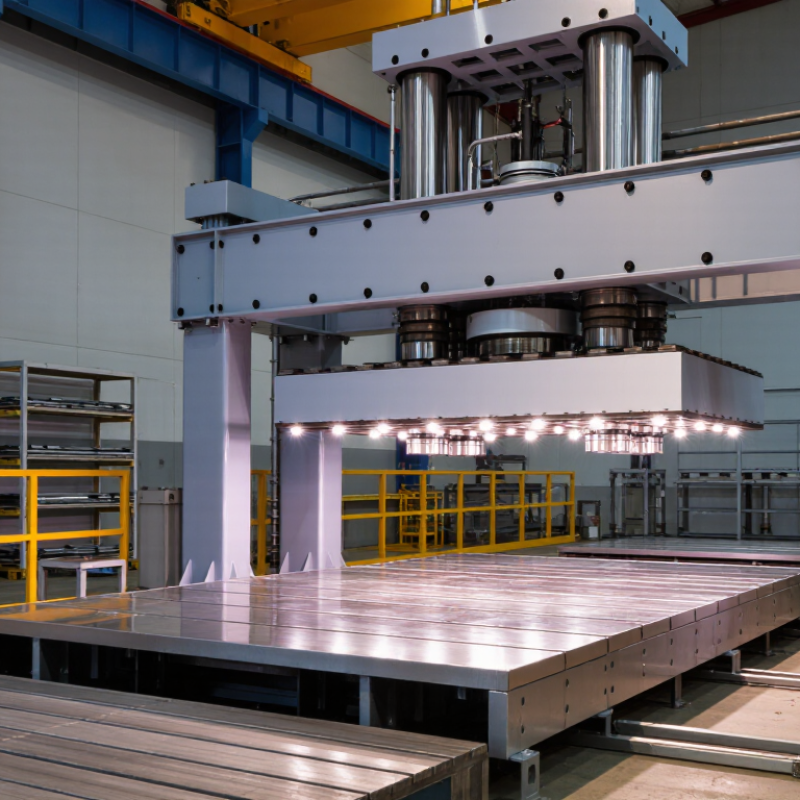
Four-column frames use vertical columns to guide the moving platen. They provide open access on multiple sides and are common for molding, trimming, and general-purpose work. A straight-side frame uses deep side members to resist spreading, which can support heavier or more demanding applications. It may restrict access compared with a four-column design. Drawings help, but they do not tell the whole story: tooling changes, part size, and maintenance access matter too. Measure the largest job and consider where hands, fixtures, and service tools must fit before selecting a frame.

Comparing Frame Designs by Strength, Accuracy, and Accessibility

Frame design shapes how a hydraulic press handles load, holds alignment, and gives operators room to work. H-frame presses use two upright sides and a crosshead, creating a stiff structure for many straight-down jobs. Their open front and sides make loading dies and larger workpieces relatively practical. Under heavy force, however, frame deflection still depends on material, weld quality, and construction.

C-frame presses provide excellent access from three sides, which helps when parts need frequent positioning or inspection. That convenience has a trade-off. The open throat can flex under uneven or off-center loading, reducing accuracy and increasing wear. For repeatable work, keep the force centered and check alignment under load, not just with the ram raised. A quick visual check is not enough.

Four-column designs guide the moving platen along multiple posts, supporting consistent travel when tooling and setup are properly maintained. Their access may be less convenient around the sides, and posts can obstruct awkwardly shaped parts. In practical selection, compare rated capacity with the actual work area, throat depth, and required tolerance. I would not assume the heaviest frame is automatically the most accurate; installation, platen guidance, and regular inspection matter too. Real shop layouts sometimes make a theoretically ideal press inconvenient.

What Is the Best Type of Frame Hydraulic Press in 2026? Comparing Frame Designs by Strength, Accuracy, and Accessibility

These qualitative ratings compare common frame-design tendencies on a 1–5 scale, where 5 is higher. C-frame presses offer open access but can deflect more under off-center loads; straight-side frames are typically more rigid, while H-frame and four-column designs offer different balances of rigidity and access. Actual performance depends on press construction, tooling, load, and maintenance.

Matching Press Frame Types to Different Industrial Applications

A C-frame hydraulic press suits short-run work that needs open, three-sided access, such as punching, straightening, and small-part assembly. Operators can position parts quickly, but the frame may deflect under off-center loads. Check the rated capacity at the actual working point, not only at the center. Access matters.

For deep drawing, large dies, or repeated molding, a four-column press distributes load more evenly across the bed. A H-frame press offers a rigid structure for heavier forming and larger workpieces, though its footprint and tooling access may constrain a crowded cell. The U.S. Department of Energy’s 2022 Industrial Decarbonization Roadmap estimates industry produces about 30% of U.S. energy-related emissions. That makes pump efficiency, idle time, and cycle settings worth checking alongside tonnage. A bigger press is not automatically a better fit. This is not a perfect rule: part geometry, die height, and required daylight can change the choice. Before purchase, compare frame deflection data and test representative parts under realistic off-center loading.

Evaluating Safety, Maintenance, and Operating Costs in 2026

What Is the Best Type of Frame Hydraulic Press in 2026?

The best frame depends on the workpiece, loading pattern, and service access. A four-column design supports balanced work and offers access from several sides. An H-frame suits heavy, straightforward jobs, while a C-frame leaves one side open but needs careful control of off-centre loading. A rigid frame alone does not make a press safe.

Check guarding, interlocks, emergency stops, and clear access to maintenance points before comparing purchase prices. The U.S. Bureau of Labor Statistics’ 2022 Census of Fatal Occupational Injuries recorded 738 deaths in the broad “contact with objects and equipment” category. That figure is not press-specific, but it underscores why guarding and operator training belong in the cost assessment. Small details matter.

Maintenance changes the ownership calculation. The U.S. Department of Energy’s Operations & Maintenance Best Practices Guide reports predictive maintenance savings of 8–12% compared with preventive maintenance, and 30–40% compared with reactive maintenance. Treat these as general benchmarks, not guaranteed press savings. Ask suppliers for service intervals, seal and filter replacement guidance, spare-part availability, and estimated downtime. A caveat: buyers can overlook the cost of waiting for parts. Compare energy use under your actual duty cycle, not just the motor rating, and include inspection time in annual operating estimates.

Choosing a Frame Hydraulic Press for Your Production Requirements

A frame hydraulic press should fit the work, not just the force listed on a specification sheet. Start with the parts you make: their dimensions, materials, and how they sit on the bed. Then check required tonnage, stroke, daylight, and bed area. Leave room for tooling and safe loading. Small details matter.

An H-frame offers open access from several sides and can suit varied jobs, though its footprint may be larger than a compact setup needs. A C-frame gives convenient front and side access for smaller parts, but off-center loading deserves careful attention. Four-column designs provide guided movement and clear access around the working area. Compare each layout with your actual fixtures, not an imagined ideal setup.

Think about production rhythm, too. Frequent die changes may make quick adjustment and accessible controls valuable; steady, repetitive work may call for a different balance. Ask how the press behaves at the working load, and review maintenance access, guarding, and operator visibility. A paper calculation can miss an awkward part or a crowded workbench. Real shops are rarely that tidy. There may be no perfect frame—only one that handles your parts reliably without making everyday setup harder.