

Best Channel Magnets Manufacturers in China?
Choosing among the best Channel Magnets manufacturers in China takes more than comparing catalog prices. A channel magnet may look simple: a steel profile, a magnetic strip, and a smooth coating. Yet small differences in dimensions, surface finish, and magnetic consistency can affect how securely it holds a sign or fixture. Small details matter.
Michael Faraday, whose experiments helped establish the science of electromagnetism, wrote, “Nothing is too wonderful to be true, if it be consistent with the laws of nature.” That principle suits careful sourcing: ask for measurable specifications, not broad promises. Compare holding-force data under stated test conditions, dimensional tolerances, coating options, and sample results. A number without its test method is hard to judge.
This guide examines Chinese suppliers through practical criteria, including product range, manufacturing controls, customization, communication, and export experience. It also considers questions buyers should ask before placing an order: Can the supplier provide a drawing? Are samples available? How are changes to materials or dimensions documented? A polished website is not proof of consistent production. Supplier comparisons can also be imperfect, since factories may use different test setups and terminology. Keep that in mind. The aim is not to crown a universal winner, but to help buyers identify manufacturers worth evaluating against their application, budget, and quality requirements.
What Are Channel Magnets and How Are They Used?
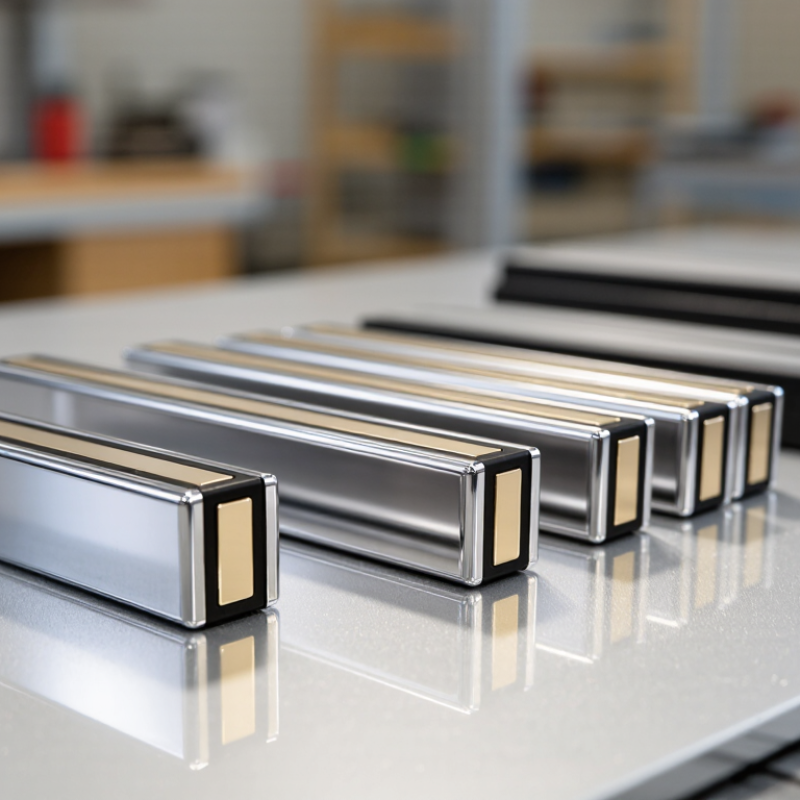
A channel magnet is a permanent magnet set inside a U-shaped steel channel. The steel side walls help direct magnetic force toward the open face and protect the magnet from some impact. Many versions include countersunk holes, so screws can secure them to a cabinet, sign, or fixture. They are compact. The working face should sit close to clean, flat steel for a dependable hold.
Channel magnets are used to mount removable signs, position workshop jigs, hold access panels, and attach sensors or display parts. For example, a small magnet can keep a metal sign aligned on a painted equipment door. In a fixture, several units may hold a workpiece steady without drilling into it. They are not universal fasteners. On a curved, rough, or thin surface, contact may be limited and holding strength can drop.
When choosing one, check the channel dimensions, hole spacing, magnet material, and stated pull force. Pull ratings are often measured on thick, smooth steel under ideal conditions; real installations may perform differently. Paint, dust, vibration, and sideways loading all matter. I would not size a magnet from its rating alone. It is worth testing the actual surface and load, because a neat catalog figure can hide an awkward installation.
How to Evaluate Channel Magnet Manufacturers in China
Best Channel Magnets Manufacturers in China?
When evaluating channel magnet manufacturers in China, look beyond catalog photos and quoted prices. Ask for drawings that specify channel dimensions, magnetic grade, pole arrangement, and working temperature. These details affect fit and holding performance. Request a sample made to the proposed specification, then test it in your actual setup. A magnet that feels strong by hand may not perform the same way across an air gap or on a painted steel surface.
Tips: Ask how magnetic strength is measured and request the test method with the results. Check whether inspection records cover dimensions, coating, and magnetization direction. Compare sample results with production tolerances, not just the approved sample.
Reliable suppliers explain their process clearly. Ask how they control assembly alignment, adhesive application, and surface protection. If your application involves vibration or frequent cleaning, describe those conditions before requesting a quotation. Check lead times and packaging details in writing. A polished response is useful, but it is not proof of consistent production. Sometimes the best next step is a small trial order—and a careful review of what did not match expectations.
Key Chinese Channel Magnet Manufacturers and Their Specialties
Chinese channel magnet manufacturers commonly specialize in three areas. Some produce ferrite magnets bonded to steel channels for economical, steady holding in fixtures and cabinet hardware. Others build compact neodymium channel assemblies, where a stronger magnetic field fits into a smaller footprint. A third group focuses on fabrication: cut-to-length channels, drilled mounting holes, countersinks, and custom shapes. Capabilities vary by factory, so these are useful categories, not a ranking.
For practical sourcing, ask how the supplier controls channel dimensions, magnet placement, and pull-force testing. A few millimeters of steel thickness can change how an assembly mounts and performs. Details matter. Request a sample matching the intended surface, air gap, and load direction; a catalog figure may not reflect a real installation. Also confirm coating options and temperature limits, especially for humid or warm environments. Some manufacturers handle routine sizes efficiently, while smaller custom runs may take more coordination. That is easy to overlook. Compare measured samples and production tolerances, not just quoted force, before choosing a supplier.
How Manufacturers Differ in Quality, Customization, and Production
Best Channel Magnets Manufacturers in China?
Manufacturers differ less in their promises than in how they control materials, dimensions, and batch consistency. The USGS Mineral Commodity Summaries 2024 reported China produced 240,000 metric tons of rare earths in 2023, out of 350,000 tonnes worldwide. That figure describes mined supply, not channel-magnet quality—and many channel magnets use ferrite or flexible magnetic materials instead. Buyers should ask which material is used and request a lot-specific test report.
Customization is practical when a supplier can adjust magnet width, thickness, coating, adhesive, and cut length without losing dimensional control. Ask for drawings with tolerances, then test samples in the actual metal channel. Small details matter. A magnet that holds firmly on a flat steel plate may perform differently across a curved surface or painted substrate. Honestly, a polished datasheet cannot reveal every production variation.
Production capability shows in repeatability. Check how incoming materials are inspected, how often dimensions and holding force are sampled, and whether batches can be traced to test records. The IEA’s Global Critical Minerals Outlook 2024 highlights the concentration of rare-earth processing in China, but scale alone does not prove reliable output. Request samples from more than one production batch. Test them under your intended load and temperature. One overlooked point: compare results using the same setup, or supplier figures may not be comparable.
How to Select a Channel Magnet Supplier for Your Project
A channel magnet must fit the job, not just the catalog. Specify its dimensions, steel grade, holding-force target, operating temperature, and exposure to moisture or dust. Ask suppliers how they measure pull force and whether their test setup matches your steel thickness and contact surface. Small differences matter.
The USGS Mineral Commodity Summaries 2025 estimated global rare-earth mine production at 390,000 metric tons in 2024, with China producing 270,000 metric tons. These figures describe raw materials, not channel magnets, but they underline the value of checking material sourcing and batch traceability. Request a sample, a written inspection report, and clear tolerances before approving production. Ask how the supplier controls magnet placement, coating thickness, and dimensional variation. A polished datasheet is not proof. Compare test results from your own fixture, especially if the magnet will hold parts during vibration or repeated handling. I would not rely on a single pull-force number; real contact conditions can change it. That extra check takes time, but it can prevent a poor fit.
| Selection Dimension | What to Specify | Evidence to Request from the Supplier | How to Evaluate It for Your Project |
|---|---|---|---|
| Magnet type and magnetic circuit | Define whether the application needs a permanent-magnet channel assembly, its intended mounting arrangement, and the target workpiece material. | Assembly drawing, magnet-material specification, and an explanation of the magnetic circuit and pole arrangement. | Confirm the proposed design suits the workpiece and installation. Do not compare magnetic grades alone; assembly geometry and the contact surface also affect performance. |
| Holding-force requirement | State the required holding force and the conditions under which it must be achieved, including the test surface, contact area, pull direction, and any air gap. | Test method, test setup, measured results for the proposed assembly, and the conditions used for the measurement. | Compare results only when test conditions are equivalent. Ask for testing on a representative workpiece if its surface, thickness, or shape differs from the supplier’s test piece. |
| Dimensions and fit | Provide the channel’s length, width, height, mounting-hole locations, clearances, and any required dimensional tolerances. | A dimensioned drawing, tolerance information, and a sample or first-article inspection report where applicable. | Check the drawing against the available installation space and mating parts. Confirm which dimensions are controlled and how they are inspected. |
| Operating environment | Specify operating temperature, exposure to moisture or chemicals, vibration, and whether the magnet will be used indoors or outdoors. | Recommended operating limits for the selected magnet material and assembly, plus relevant environmental or coating test information. | Ensure the selected material and coating are suitable for the actual service conditions. Temperature capability varies by magnet material and grade. |
| Channel material and finish | Identify requirements for the channel body, such as base material, corrosion resistance, surface finish, and compatibility with nearby components. | Material specification, coating or finish description, and inspection details for the supplied channel body. | Check that the material and finish meet the project’s mechanical, environmental, and appearance requirements. Confirm whether the finish changes critical dimensions. |
| Magnet protection and handling | Consider chipping, corrosion, impact, and handling risks during assembly, shipping, and use. | Details of magnet encapsulation or coating, assembly protection, packaging method, and handling instructions. | Review protection for the actual application. Some magnet materials are brittle and may require protection from impact or corrosion. |
| Customization and production readiness | Clarify whether the project requires custom dimensions, mounting features, magnetic strength, or a non-standard finish. | Design-for-manufacture feedback, tooling requirements, prototype process, production lead-time assumptions, and change-control procedure. | Confirm the supplier can produce the approved drawing consistently and explain how design changes are reviewed before production. |
| Quality control and traceability | Define inspection requirements for dimensions, appearance, assembly, and magnetic performance. | Inspection plan, sample inspection records, lot identification method, and applicable quality-system documentation. | Verify that documents apply to the production site and product scope. Agree on acceptance criteria and record requirements before ordering. |
| Samples and validation | Plan how prototypes or production samples will be evaluated in the intended installation and operating conditions. | Sample schedule, sample identification, test support, and a process for resolving failures or design changes. | Test fit, holding performance, environmental suitability, and repeatability before approving volume production. |
| Commercial and delivery terms | Confirm order quantity, packaging, delivery destination, required documentation, and the agreed delivery schedule. | Written quotation with product revision, quantity, packaging details, lead-time assumptions, and applicable shipping terms. | Compare quotations using the same specification and delivery basis. Confirm responsibilities for packaging, export documents, and shipment arrangements. |
| Technical communication | Assess how clearly the supplier can discuss drawings, measurements, testing, and technical changes. | Written responses to technical questions, drawing review comments, and documented confirmation of agreed specifications. | Prefer a supplier that identifies assumptions and limitations rather than relying on an unqualified holding-force or performance claim. |
