What Are the Best Cable Branch Boxes Made in China?
China’s electrical manufacturing sector is becoming more important as grids expand, factories modernize, and renewable projects multiply. The IEA’s Electricity 2024 report forecasts global electricity demand growth of about 3.3% annually from 2024 to 2026. China remains one of the largest contributors to this increase. These conditions create stronger demand for dependable Cable Branch Boxes in commercial, industrial, and infrastructure installations.
The best Chinese Cable Branch Boxes are not simply the cheapest products. They should provide stable current distribution, secure cable entry, effective insulation, and protection against dust and moisture. IEC 60529 supports the evaluation of IP protection ratings, while IEC 61439 provides a framework for low-voltage switchgear and controlgear assemblies, where applicable. Buyers should also review terminal temperature-rise data, short-circuit withstand performance, enclosure materials, and production traceability. Small details matter. A loose gland or poorly tightened terminal can create heat inside a crowded box.
China’s advantages include broad supplier networks, flexible customization, and advanced molding and metal-processing capacity. However, quality is not uniform across every factory. A polished sample proves little without test records, batch consistency, and clear technical drawings. That is the difficult part. This guide compares manufacturers through practical evidence, including certifications, factory experience, inspection procedures, and application feedback. Reports from the China Electricity Council and international energy agencies show continued investment in power infrastructure, yet market growth alone does not guarantee product reliability. Some judgments may change after field testing. For that reason, the most credible selection process combines published standards with hands-on verification.
What Is a Cable Branch Box and How Does It Work?
What Are the Best Cable Branch Boxes Made in China?
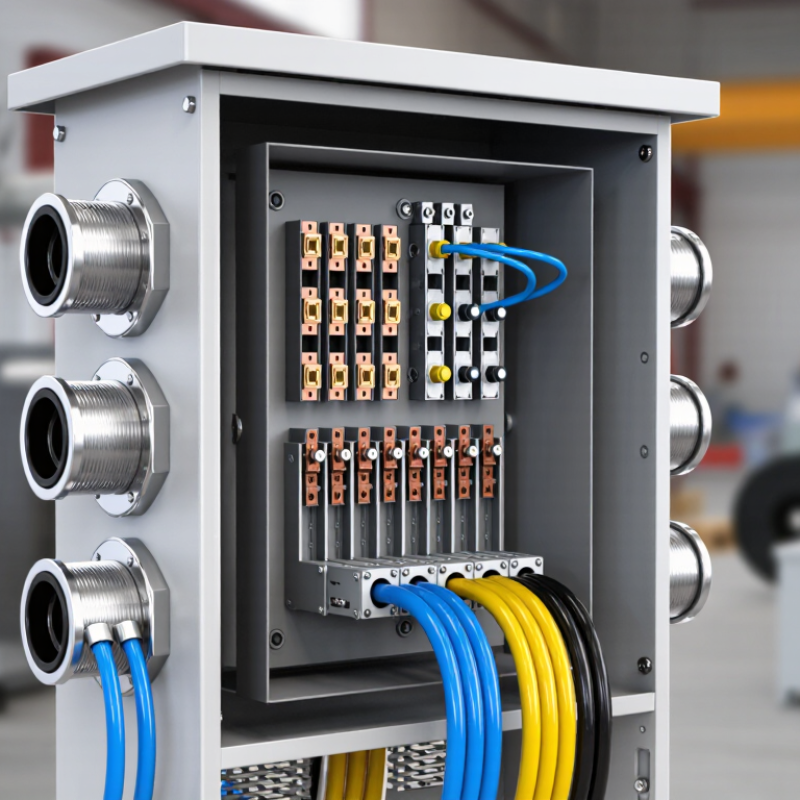
A cable branch box distributes power from one incoming cable to several outgoing circuits. It usually contains insulated terminals, busbars, glands, and a protective enclosure. The incoming cable enters through one gland. Conductors connect to terminals inside. Outgoing cables then leave through separate openings.
The box protects connections from dust, moisture, impact, and accidental contact. Its enclosure material matters. Polycarbonate resists corrosion and suits many outdoor installations. Metal boxes can offer stronger mechanical protection, but they require proper grounding.
Good designs provide clear terminal spacing, secure covers, and enough room for cable bending. Crowded wiring creates heat and slows maintenance. That detail is easy to underestimate.
In practical inspections, technicians check conductor size, tightening torque, gland sealing, and enclosure integrity. They also confirm temperature limits and relevant certification before installation. Chinese manufacturers offer many configurations, but quality can vary between production batches. Ask for material data, inspection records, wiring diagrams, and sample testing. A neat appearance alone proves little.
Tips: Choose a box with spare terminal capacity. Mark every outgoing cable clearly. Recheck connections after initial operation. Moisture often enters through poorly tightened glands. A simple inspection can prevent expensive faults.
Which Types of Cable Branch Boxes Are Made in China?
Chinese manufacturers produce several cable branch box types for different installation conditions. Low-voltage branch boxes commonly support street lighting, commercial buildings, and residential distribution. Medium-voltage units serve industrial networks and utility projects. Waterproof outdoor boxes use sealed enclosures and cable glands for roadside or underground locations. Metal-enclosed designs offer stronger mechanical protection, while compact molded boxes simplify installation in narrow cabinets.
Industry reports show why this product range is expanding. MarketsandMarkets estimates the global cable accessories market could grow from about USD 6.3 billion in 2023 to USD 8.8 billion by 2028, at roughly 6.9% annually. Research and Markets also identifies grid upgrades, renewable projects, and urban construction as major demand drivers. In practical inspections, enclosure rating, conductor space, thermal performance, and terminal torque matter more than appearance. A neat box can still hide weak sealing.
Tips: Match the box to voltage, cable size, and installation location. Check IP protection claims against test documents, not photographs. Ask for temperature-rise results and material certificates. For coastal sites, examine corrosion resistance carefully. For solar or battery projects, verify continuous-load performance. One detail is often missed: spare cable capacity. Leaving room for future circuits reduces later modification risks, although it increases the initial enclosure size. No single type fits every project.
What Features Define a High-Quality Chinese Cable Branch Box?
A high-quality Chinese cable branch box begins with a strong, well-sealed enclosure. A practical choice uses flame-retardant, UV-resistant material or treated metal. The housing should resist rain, dust, vibration, and temperature changes. Look for a dependable IP rating supported by test records, not only printed labels. Smooth edges matter too. They protect installers and cable insulation.
Inside, conductive copper bars should have stable thickness and secure connections. Loose terminals create heat, discoloration, and possible failure. Good boxes provide enough space for bending cables without crushing them. Cable glands should grip different cable diameters and maintain sealing after repeated maintenance. Clear circuit identification also helps technicians work faster and avoid mistakes. I have found that small labels often prevent larger problems.
Manufacturing control defines reliability more than appearance. Reputable factories use incoming material checks, torque testing, insulation testing, and routine sample inspections. Traceable batch records make defects easier to investigate. Certification from an independent laboratory adds useful evidence, although paperwork cannot replace physical inspection. In one installation review, the box looked excellent, but its terminal screws were too short. That detail was easy to miss. No enclosure is perfect, and suppliers should explain limitations honestly. A careful buyer should request drawings, test reports, temperature data, and samples before approving large quantities.
What Are the Best Cable Branch Boxes Made in China? - What Features Define a High-Quality Chinese Cable Branch Box?
| Evaluation Dimension | High-Quality Requirement | Typical Technical Reference | Verification and Quality Indicators | Common Applications |
|---|---|---|---|---|
| Enclosure Material | Use a mechanically strong, weather-resistant and flame-retardant enclosure material suitable for the installation environment. | Polycarbonate Glass-fiber-reinforced polyester Aluminum alloy UV-stabilized plastics are preferred for outdoor exposure. | Check material certificates, impact resistance, UV-aging performance, flame-retardant classification and dimensional stability. | Outdoor distribution Industrial control |
| Ingress Protection | The enclosure should prevent the entry of dust and water at a level appropriate to the installation location. | IP54 IP65 IP66 IP65 or higher is commonly selected for exposed outdoor installations. | Confirm third-party or factory test reports for dust protection, water jets and sealing performance. Inspect gasket continuity and cable-entry sealing. | Street lighting Solar systems Outdoor networks |
| Electrical Voltage Rating | The rated voltage and insulation system must match the cable network and local electrical regulations. | Low-voltage products commonly cover systems up to 1,000 V AC or 1,500 V DC, depending on the product design and certification. | Verify rated voltage, insulation voltage, creepage distance, clearance distance and dielectric withstand-test results. | Low-voltage power distribution Photovoltaic DC circuits |
| Current Capacity | The current rating should be based on conductor size, terminal design, heat dissipation and the expected continuous load. | Common branch-box configurations range from approximately 16 A to 630 A. Actual capacity depends on terminals, busbars and enclosure temperature. | Review temperature-rise tests, terminal torque requirements, conductor compatibility and continuous-current test data. | Lighting circuits Motor feeders Power distribution |
| Cable Compatibility | Cable entries should accommodate the required conductor type, outside diameter and bending radius without damaging insulation. | Compatible designs may support copper or aluminum conductors, single-core or multicore cables, and metric or other specified cable-entry systems. | Check cable diameter range, gland size, conductor cross-section, stripping length and minimum bending radius specified by the manufacturer. | Power cables Control cables Communication cables |
| Branch Connection Method | The connection method should provide stable electrical contact, low resistance and secure mechanical retention. | Terminal blocks Busbars Insulated piercing connectors Compression connectors | Inspect contact surface quality, connector compatibility, tightening torque, pull-out resistance and resistance stability after thermal cycling. | Parallel branches Service connections Feeder splitting |
| Insulation and Safety | Live parts should be properly insulated and protected against accidental contact during installation and maintenance. | Features may include insulated barriers, touch-safe terminals, protective covers, strain relief and clear circuit identification. | Confirm insulation resistance, dielectric strength, touch protection, terminal separation and correct polarity or phase markings. | Commercial buildings Industrial installations Utility equipment |
| Temperature Performance | The box and connection system should remain stable under the expected ambient temperature and load-related heat. | Many outdoor enclosures are designed for approximately -40°C to +80°C; the actual range must be confirmed for each product. | Evaluate heat-aging data, temperature-rise results, gasket elasticity, terminal loosening and enclosure deformation after thermal cycling. | Cold regions High-temperature areas Outdoor cabinets |
| Mechanical Protection | The enclosure should resist impact, vibration and installation stress while maintaining its sealing and electrical safety. | A suitable impact rating, such as IK08 or IK10, may be selected according to the risk of mechanical damage. | Check impact-test results, hinge and cover strength, mounting-hole integrity, screw quality and resistance to vibration. | Factories Transport infrastructure Public facilities |
| Corrosion Resistance | Materials, coatings and fasteners should resist humidity, salt spray, chemicals and galvanic corrosion where applicable. | Stainless steel hardware, corrosion-resistant coatings and non-metallic enclosures can improve service life in harsh environments. | Review salt-spray or corrosion-test results, coating thickness, fastener material and compatibility between dissimilar metals. | Coastal projects Wastewater plants Chemical facilities |
| Standards and Compliance | The product should be designed and tested against the standards required in the destination market and application. | Relevant references may include IEC 60670, IEC 60529, applicable low-voltage assembly standards and local certification requirements. | Request current test reports, declarations of conformity, traceable model numbers and documentation matching the supplied configuration. | Domestic projects Export projects Regulated installations |
| Manufacturing Quality | Consistent molding, clean cable-entry openings, accurate assembly and reliable quality-control procedures are essential. | Important controls include incoming-material inspection, dimensional checks, torque control, electrical testing and final visual inspection. | Look for batch traceability, inspection records, sampling plans, corrective-action procedures and consistent enclosure-to-cover fit. | Large-volume procurement OEM projects Infrastructure programs |
| Installation and Maintenance | The design should reduce installation time and permit safe inspection or future cable replacement. | Useful features include removable mounting plates, captive screws, labeled terminals, adequate internal space and accessible test points. | Assess installation instructions, wiring space, terminal accessibility, sealing replacement procedure and availability of spare components. | Maintenance-intensive sites Distributed energy systems Building services |
| Configuration Flexibility | The supplier should be able to adapt the number of branches, cable entries, terminal arrangement and mounting method without compromising safety. | Configurable options may include 2-way to multi-way branching Custom glands DIN-rail components Busbar layouts | Confirm that customized versions receive the same electrical, mechanical and ingress-protection validation as the standard design. | OEM equipment Solar farms Special-purpose machinery |
| Documentation and Support | Complete technical documentation helps ensure correct selection, installation, inspection and long-term maintenance. | Recommended documents include datasheets, wiring diagrams, installation manuals, test reports, material declarations and spare-part information. | Check whether documents identify the exact model, revision, ratings, cable range, tightening torque and environmental limitations. | Professional installation International procurement After-sales service |
| Total Cost of Ownership | The best product is not defined by purchase price alone; reliability, installation labor, maintenance and replacement risk should be considered. | Compare service life, energy-loss risk at connections, spare-part availability, warranty terms, delivery consistency and compliance costs. | Use a total-cost comparison covering product price, installation time, inspection requirements, expected replacement frequency and project downtime. | Utility projects Commercial developments Long-life infrastructure |

How Should You Compare Chinese Cable Branch Box Manufacturers?
When comparing Chinese cable branch box manufacturers, start with technical fit rather than catalog variety. Check the rated voltage, current capacity, enclosure material, and protection level. For outdoor projects, ask for the tested IP rating, not only a printed claim. Review conductor layouts, insulation thickness, terminal design, and heat resistance. Clear drawings matter.
Factory capability should be verified with evidence. Request test reports, quality certificates, production photos, and sample inspection records. Confirm whether testing is performed in-house or by an independent laboratory. A reliable manufacturer should explain its process without avoiding difficult questions. Ask how copper parts are inspected, how resin is mixed, and how each batch is traced. Small details reveal discipline.
Do not judge quality from a polished showroom. A clean workshop helps, but it proves little alone. Check tooling condition, worker training, packaging strength, and delivery history. Compare sample results with mass-production controls. I once valued a low quotation too highly; the cheaper option used thinner internal components. That mistake changed my evaluation method. Price still matters, but warranty terms, spare parts, response time, and technical support deserve equal attention. Allow room for uncertainty. Claims should be checked against documents, physical samples, and independent inspection.
What Are the Best Cable Branch Boxes Made in China?
The chart presents a practical, brand-neutral comparison framework for Chinese cable branch box manufacturers. Higher scores indicate greater importance during procurement. Buyers should verify enclosure protection, rated current and voltage, short-circuit performance, applicable standards, documentation, and customization capability through test reports and technical datasheets.
What Standards and Tests Ensure Safe Cable Branch Boxes?
The best cable branch boxes made in China are not defined by appearance alone. Their safety depends on documented design, traceable materials, and repeatable testing. For low-voltage applications, buyers should check alignment with IEC 60670-1, GB/T 17466, and relevant assembly requirements. These standards address enclosure construction, wiring space, mechanical strength, and protection against electric shock.
A competent test program should include insulation resistance, dielectric withstand, earth continuity, temperature rise, and short-circuit performance. The enclosure also needs verified IP protection under IEC 60529. Outdoor boxes may require impact testing under IEC 62262, plus corrosion and ultraviolet exposure checks. Flame resistance matters when polymer parts surround terminals. The International Energy Agency’s Electricity 2024 report forecasts global electricity demand growth of about 4% in 2024 and 2025. More connections increase the need for dependable branch protection. Still, a certificate alone is not enough. It may cover another enclosure size or configuration. That detail is often missed.
Tips: Request full test reports, not only logos or declarations. Check the tested cable area, current rating, ambient temperature, and gland arrangement. Ask for routine inspection records, including torque checks and sealing tests. During sampling, inspect terminal spacing and compression marks. Small defects can become hot spots. A practical weakness remains: many purchasing checklists focus on IP ratings but ignore temperature rise. That deserves a second review.