
2026 Best UV Golf Umbrella for Sun Protection?
For golfers, an umbrella can mean more than staying dry. It can create useful shade during a slow round, when the sun feels strongest across an open fairway. A Uv Golf Umbrella should therefore be judged by more than its canopy size or color. Reliable UV protection claims, comfortable handling, and sturdy construction all matter.
This 2026 guide will look at the details that help separate practical options from attractive marketing. We’ll consider stated UPF ratings and whether manufacturers explain how those ratings were tested. We’ll also examine canopy coverage, shaft and frame materials, grip comfort, weight, and how easily the umbrella fits a golf bag. No single number tells everything. A high rating may sound reassuring, but it does not explain how much of your shoulders or arms the canopy shades.
On the course, small details become noticeable. A canopy that is awkward to open can be frustrating between shots, while a slick handle may feel less secure with sweaty hands. Wind resistance deserves attention, too, though no umbrella should be treated as indestructible. We’ll compare available features without assuming that the most expensive model is automatically the best choice. Product claims can change, and real comfort depends on your height, bag, and playing conditions. I would be cautious about promises that sound absolute. The strongest choice is usually the one with clear specifications, useful coverage, and a design you can manage comfortably for several hours.
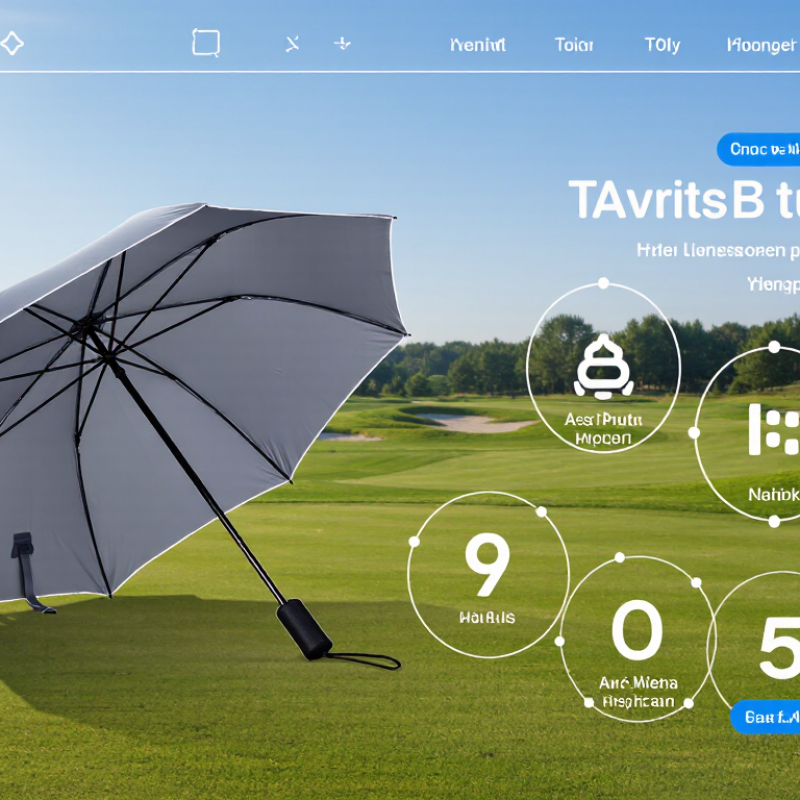
UV Exposure on the Course: UVA Spans 315–400 nm and UVB 280–315 nm
UVA spans 315–400 nm, while UVB covers 280–315 nm. Both can reach golfers during a round, though their effects differ. UVA penetrates deeper into the skin and is present throughout daylight hours. UVB is more closely linked with sunburn and varies with season, time, and location. Neither range stops at a cloud edge or disappears because a breeze feels cool.
A golf umbrella can create useful shade, especially over the face, neck, and shoulders. But coverage depends on its canopy size, fabric, and position; sunlight can still reach skin from the sides or reflect off nearby surfaces. Look for clear UV-protection information from the maker, rather than assuming a dark canopy blocks every wavelength. Keep the umbrella angled as the sun moves, and pair it with sunscreen and protective clothing. Small adjustments help. One detail is easy to overlook: holding an umbrella over a golf bag does little for exposed arms or legs. It is also tempting to treat a stated protection rating as a guarantee in every setting. It is not; shade shifts, and the course changes around you.
| Topic | Fact or measure | What it means on the golf course |
|---|---|---|
| UVA wavelength | 315–400 nm | UVA reaches the skin and contributes to skin aging and skin cancer risk. Look for shade that reduces both UVA and UVB exposure. |
| UVB wavelength | 280–315 nm | UVB is a major cause of sunburn and also contributes to skin cancer risk. Umbrella shade can help, but does not eliminate exposure. |
| UPF 50 fabric rating | A UPF 50 fabric transmits about 1/50, or 2%, of the tested UV radiation under test conditions. | When comparing umbrellas, check for a stated UPF rating and the conditions covered by the rating. Do not assume a dark or thick-looking canopy has a tested rating. |
| UV Index: 0–2 | Low | UV exposure is generally lower, but an umbrella can still provide useful shade during a long round. |
| UV Index: 3–5 | Moderate | Use sun protection, including shade, protective clothing, and sunscreen on exposed skin. |
| UV Index: 6–7 | High | Seek shade when possible and use multiple forms of sun protection, especially during the middle of the day. |
| UV Index: 8–10 or 11+ | Very high or extreme | Limit direct sun where practical. An umbrella is one layer of protection, not a substitute for clothing and sunscreen. |
| Shade limitations | UV can reach you from the sides and from scattered or reflected light. | A canopy does not provide complete protection, particularly when the sun is low or the golfer is outside its shaded area. |
| Practical comparison checklist | Check the stated UV or UPF rating, canopy coverage, ventilation, weight, and ease of opening. | Choose a design that offers usable shade while remaining comfortable to carry and manage during a round. |
UPF Ratings Explained: UPF 50+ Transmits No More Than 2% of UV
A UPF 50+ label tells you that tested fabric lets through no more than 2% of ultraviolet radiation under specified testing conditions. Put simply, at least 98% is blocked by the material. That figure describes the fabric, not every ray reaching your skin. Gaps around the canopy, shifting shade, and sunlight reflected from pavement or water can still matter.
For a golf round, look for a canopy that stays broad enough to shade your face, neck, and shoulders as the sun moves. A vented design may feel more comfortable in a breeze, but check that ventilation does not create large uncovered areas. Hold the umbrella over yourself and notice where the shade falls while standing and walking. Small details count.
UPF 50+ is a useful benchmark, not a force field. That matters. Keep exposed skin covered when practical, and use sunscreen on areas the umbrella cannot shade. Fabric condition can also change with wear, stretching, or damage, so replace a canopy that has become thin or torn. The rating is reassuring, but the sun does not stay in one place—and I would not rely on the umbrella alone.
UPF Testing Standards: AS/NZS 4399:2020 Rates UPF 50+ as Excellent
2026 Best UV Golf Umbrella for Sun Protection?
AS/NZS 4399:2020 classifies sun-protective materials by their Ultraviolet Protection Factor. Under this system, UPF 50+ is rated Excellent. It allows about one-fiftieth of the tested UV radiation through the material. That is a useful benchmark, but check what was actually tested. The standard addresses sun-protective clothing; a fabric rating alone does not prove that a complete golf umbrella has been independently tested or certified.
For an umbrella, ask for a test report that identifies the canopy fabric and its UPF result. Look for a broad canopy that shades your shoulders and arms, even when the sun shifts across the course. A strong rating cannot prevent UV reaching skin from the sides or reflecting off nearby surfaces. I would not treat the number as a guarantee. Wind, angle, and gaps matter.
Tips: Check the test details, not just the label. Open the canopy outdoors and see whether it covers your usual stance. Wear sunscreen and protective clothing too. Small gaps count.
Golf Umbrella Design: Compare Canopy Coverage, Wind Vents, and Stability
2026 Best UV Golf Umbrella for Sun Protection?
Canopy coverage is more than a large number on a product label. Check the opened canopy’s diameter and shape, then picture it over your shoulders and golf bag. A broad, rounded canopy shades more of your upper body, but it can catch more wind. The World Health Organization’s Global Solar UV Index guide recommends sun protection when the UV Index reaches 3 or higher. Shade helps, though reflected light and exposed arms still matter.
Wind vents can let some gusts pass through the canopy. They may improve handling, but they do not make an umbrella storm-proof. A sturdy shaft, secure joints, and a firm grip also affect stability. On an exposed tee box, a heavy canopy can feel awkward. I would rather have manageable coverage than wrestle a giant umbrella between shots.
Tips: Check canopy diameter, vent placement, and handle grip before buying. Open it outdoors on a calm day and test its balance. The NOAA UV Index forecast can help you decide when extra shade matters most. Remember, umbrella shade is not complete sun protection.
2026 Buying Criteria: Weigh UV Rating, Canopy Size, Weight, and Handle Fit
A 2026 golf umbrella should be judged by more than its shade. The World Health Organization’s Global Solar UV Index guide recommends sun protection when the UV Index reaches 3 or higher. The Skin Cancer Foundation notes that UPF 50 fabric blocks about 98% of UV radiation. Treat that figure as a useful benchmark, not a guarantee: check that the rating applies to the canopy itself. AATCC TM183 measures UV transmission through fabrics, so ask whether the maker provides results from this or an equivalent test.
Canopy size matters on an exposed tee, but a very wide umbrella can catch wind and crowd nearby players. Compare the open diameter with your stance and golf bag, then check the closed length for cart storage. Weight matters over 18 holes. A lighter frame is easier to carry, though it may feel less steady in gusts. Bigger is not always better. Handle fit matters, too; test the grip with a golf glove and notice whether the shaft feels balanced when held at shoulder height.
Tips: Check the local UV Index before play, and seek shade during peak sun. Not just shade. On a store model, open and close the umbrella, hold it for a minute, and check whether the handle pinches or twists in your hand. A canopy label without test details deserves a second look.
