




2026 Best CFRP Roughing Cutters for Global Buyers
Cfrp Roughing Cutters are becoming critical as aerospace, wind energy, automotive, and hydrogen manufacturers increase carbon-fiber-reinforced polymer production. MarketsandMarkets estimates that the global carbon fiber market may grow from approximately USD 4.3 billion in 2024 to USD 6.6 billion by 2029, at about 9% CAGR. Grand View Research also identifies expanding aerospace and automotive applications as major growth drivers. These figures describe carbon fiber, not cutting tools directly. That distinction matters.
CFRP roughing is demanding. A cutter must remove material quickly without causing delamination, fiber pull-out, heat damage, or premature edge wear. In a real workshop, the difference may appear as a clean pocket wall, a dusty spindle enclosure, or a rejected panel after inspection. Professor Paulo A. F. Martins, a recognized machining researcher, has emphasized that composite machining requires controlling both cutting mechanics and material behavior. His practical message is clear: “Composite machining is not conventional machining with different parameters.” The wording may seem obvious, but many purchasing decisions still overlook it.
This 2026 guide compares Cfrp Roughing Cutters for global buyers using flute geometry, diamond coating, chip evacuation, tool life, surface quality, and documented test conditions. ISO 230 standards can support machine-tool evaluation, while manufacturer data should confirm actual CFRP results. Not every advertised cutter performs equally. Some catalog claims remain difficult to compare. Buyers should question unsupported numbers, request sample results, and check whether testing used aerospace-grade laminate, abrasive carbon fiber, or a softer epoxy system. Small details often decide the final cost.
CFRP Roughing Cutters: Materials, Designs, and Core Functions
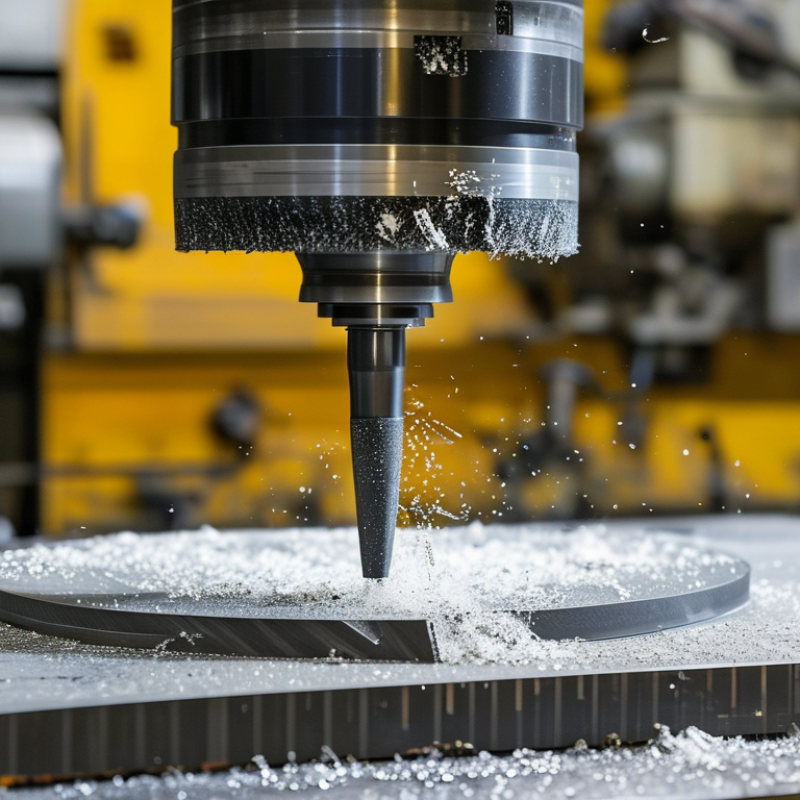
CFRP roughing cutters must handle hard carbon fibers and a softer polymer matrix at the same time. The cutting edge faces abrasion, heat, and unstable chip formation. Carbide remains practical for general production because it balances toughness, cost, and edge strength. PCD or diamond-coated carbide can extend wear life during high-volume work. However, an expensive edge is not automatically the best choice.
Grand View Research valued the global carbon-fiber market at about USD 4.41 billion in 2023. It forecasts a 7.8% compound annual growth rate from 2024 to 2030. MarketsandMarkets also projects strong expansion in carbon-fiber demand through 2029. These figures suggest greater pressure on shops to improve material removal rates without damaging laminates. Tool design becomes critical. Variable-helix flutes reduce vibration, while compression geometries help limit exit-side delamination. Unequal flute spacing can also improve stability.
Keep it rigid. Short overhangs matter. A roughing cutter should evacuate chips quickly and control abrasive dust near the cutting zone. Multi-flute designs may raise feed capacity, but they can overload a weak machine or trap dust. I have seen operators select tools from catalog speed tables alone. That approach often fails with different fiber orientations, resin systems, and clamping conditions. The CompositesWorld 2024 industry outlook repeatedly highlights process consistency as a major manufacturing concern. Trial cuts, edge inspection, and measured tool wear remain more reliable than assumptions. A small reduction in radial engagement may protect the laminate and improve total tool life.
2026 Best CFRP Roughing Cutters for Global Buyers - CFRP Roughing Cutters: Materials, Designs, and Core Functions
| Cutter Type | Typical Tool Material | Cutting-Edge Design | Common Flute / Tooth Pattern | Core Function | Best-Suited CFRP Operation | Main Advantages | Important Limitations |
|---|---|---|---|---|---|---|---|
| Polycrystalline Diamond Router | PCD cutting tips Carbide body | Sharp, wear-resistant diamond edges brazed or mechanically fixed to the tool body. | 2 to 4 teeth; straight or variable-pitch arrangements are common. | High-volume material removal while limiting abrasive wear and maintaining edge stability. | Peripheral roughing, trimming, profiling, and contouring of large CFRP panels. | Very long wear life; low fiber pull-out when correctly selected; suitable for production work. | Higher initial cost; PCD is relatively brittle and may chip after impacts or collisions. |
| Diamond-Coated Carbide Router | Fine-grain carbide Diamond coating | Continuous or segmented diamond coating over a carbide substrate. | 2 to 6 flutes; upcut, downcut, and compression versions are available. | Combines carbide toughness with a hard abrasive-resistant surface for dry CFRP cutting. | General-purpose roughing, trimming, and routing where cost and wear life must be balanced. | Lower purchase cost than solid PCD; broad geometry availability; good abrasive-wear resistance. | Coating can wear or peel if overheated, overloaded, or used in unsuitable interrupted cuts. |
| Solid Carbide Compression Router | Ultrafine carbide Optional diamond coating | Upcut and downcut sections meet near the center of the cutting length to compress surface fibers. | Usually 2 to 4 flutes with a defined compression point. | Controls delamination and reduces fiber lifting on laminated or sandwich structures. | Through-cutting CFRP sheets, stacked laminates, and components requiring clean upper and lower surfaces. | Good edge quality on both faces; helps reduce peel-up and push-out defects. | Requires correct axial engagement and workholding; less effective if the cut depth does not reach the compression zone. |
| Downcut CFRP Router | Solid carbide Diamond-coated carbide | Helical edges direct cutting forces and chips toward the workpiece. | 2 to 4 flutes; standard or variable pitch. | Presses top-layer fibers downward to improve the upper-surface finish. | Top-surface trimming, shallow pocketing, and operations where upper-face delamination is the primary concern. | Reduced top-face fuzzing and improved surface containment. | Can push chips into the cut and increase heat; chip evacuation and machine extraction must be adequate. |
| Upcut CFRP Router | Solid carbide PCD-tipped | Helical edges lift chips away from the workpiece and draw material upward. | 2 to 4 flutes; open flute spaces are used for chip clearance. | Improves chip evacuation and helps prevent recutting of abrasive CFRP dust. | Deep routing, slotting, and applications where evacuation is more critical than top-face finish. | Efficient chip removal; generally lower risk of chip packing in deep cuts. | Can lift top-layer fibers and increase peel-up if workholding and cutting parameters are poor. |
| Burr-Style Rotary Cutter | Solid carbide Diamond-coated carbide | Multiple small cutting lands or burr-like teeth distributed around the tool circumference. | High tooth count with short, interrupted cutting edges. | Provides controlled edge trimming and rapid removal of irregular laminate overhangs. | Manual or robotic trimming, edge clean-up, flash removal, and complex freeform contours. | Good maneuverability; suitable for irregular outlines and short engagement lengths. | Produces abrasive dust; edge finish depends strongly on operator or robot path control. |
| Face-Milling Roughing Cutter | Carbide inserts PCD inserts | Replaceable cutting inserts with a positive or neutral cutting geometry. | Multiple peripheral and face-mounted teeth with chipbreakers selected for composites. | Removes material from broad surfaces while maintaining a controlled axial depth of cut. | Surface leveling, step-down roughing, and preparation of CFRP parts for subsequent finishing. | Large cutting widths; replaceable edges; flexible tool maintenance. | Not ideal for narrow slots or highly detailed profiles; excessive engagement can cause delamination. |
| Compression Burr / Multi-Geometry Cutter | PCD-tipped Diamond-coated carbide | Combines compression, shear, and burr-style zones in one cutter for varied laminate conditions. | Variable pitch or alternating edge orientation to distribute cutting forces. | Balances surface-fiber control, chip evacuation, and high removal rates in complex profiles. | Automated trimming of aerospace-style laminates, honeycomb panels, and multi-layer composite parts. | Versatile for changing ply directions and mixed laminate thicknesses; can reduce secondary finishing. | Geometry is application-specific; incorrect feed direction or engagement may reduce its benefits. |
| Micrograin Carbide Roughing End Mill | Ultrafine-grain carbide Uncoated or coated | Sharp positive rake, reinforced core, and polished flutes designed for low-friction composite cutting. | 2 to 3 flutes; variable helix may be used to reduce vibration. | Provides a cost-effective option for low-to-medium production and prototype roughing. | Small components, short cutting cycles, pockets, slots, and secondary operations. | Good toughness and availability; easy to match with standard CNC toolholders. | Wears faster than PCD or diamond-coated tools in highly abrasive laminates; frequent inspection is required. |
| Specialized Honeycomb-Core Router | Carbide PCD or diamond-coated edge | Light-cutting geometry with reduced cutting pressure and chip spaces suited to thin skins and core materials. | 2 flutes or open-tooth designs; geometry depends on the skin/core combination. | Separates or trims composite skins and lightweight core materials with reduced crushing. | Sandwich panels, honeycomb structures, and bonded CFRP assemblies. | Helps limit core damage and edge breakout when used with proper support. | Not a universal solution for solid laminates; requires controlled feed, workholding, and dust extraction. |